
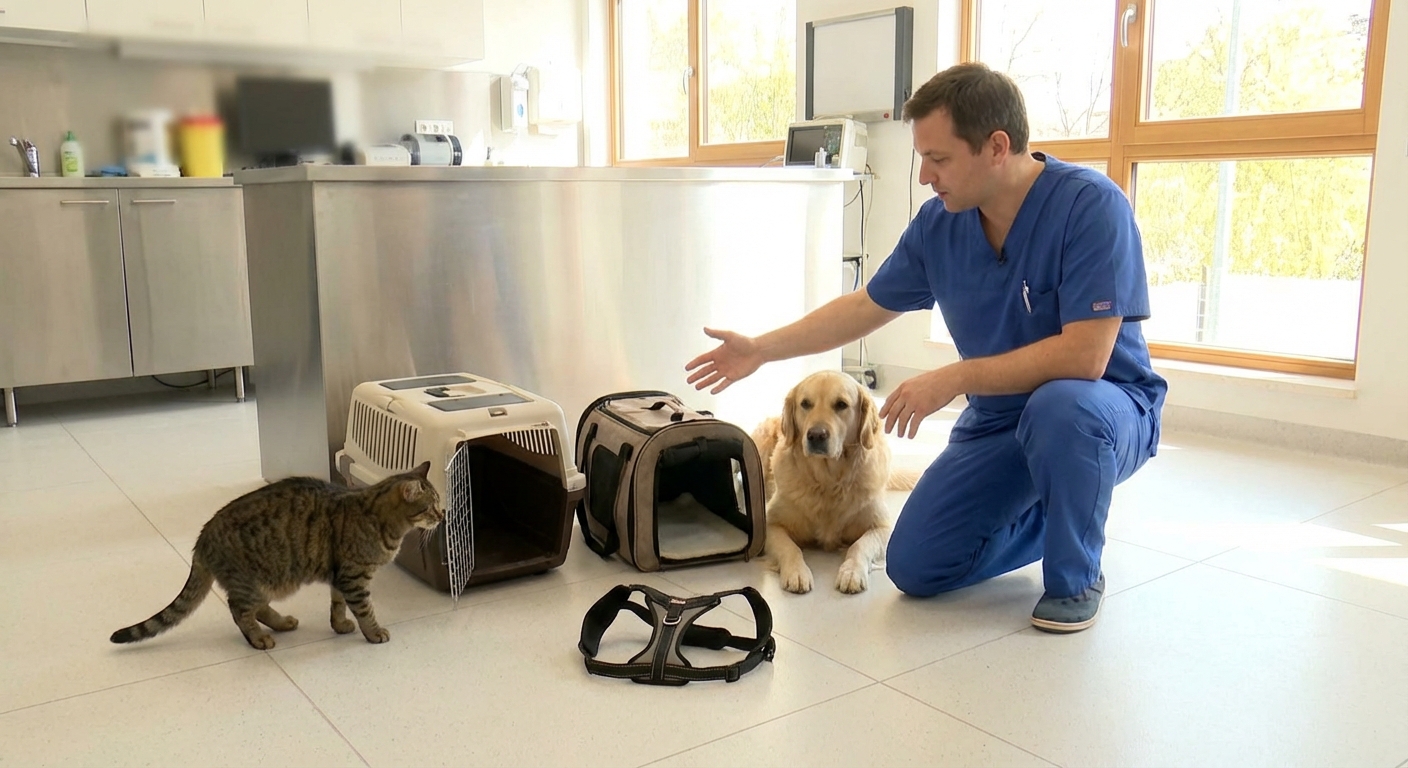
The difference between a relaxed trip and a stressful one often comes down to a single choice: how you contain and protect your dog in transit. A great carrier or harness disappears into the background. A bad one turns every bump, delay, and bathroom break into chaos.
Why Your Travel Gear Matters More Than Your Destination
This guide compares crates, carriers, and harnesses through a vet-informed, safety-first lens, with breed-specific notes and honest pros and cons for each style.
The Big Three: Crates, Carriers, Harnesses
Before we zoom into brands and models, it helps to understand the basic tools.
- Crates: Rigid enclosures, often plastic or metal, used in cars, RVs, and cargo holds.
- Carriers: Portable containers, usually soft-sided or hybrid, mainly for small and medium dogs in cabins or short trips.
- Harnesses: Worn on the body and clipped into seat belts or used for walking.
Most dogs will travel using a combo of these: for example, a harness around town, a crate for long road trips, and a carrier for flights.
Crates: The Mobile Den
When Crates Shine
- Long road trips
- RV and van life
- Hotel stays where you may step out briefly
- Large or escape-prone dogs
Types of Travel Crates
Plastic Airline-Style Crates
- Examples: Petmate Sky Kennel, MidWest Spree - Pros: Lighter than metal, more enclosed (calming for some dogs), often airline-compatible. - Cons: Not all are crash-tested; ventilation and door strength vary.
Heavy-Duty Crash-Tested Crates
- Examples: Gunner Kennels G1, Variocage, RuffLand Performance Kennels - Pros: Designed for car crashes; robust locks and hardware. - Cons: Pricey, heavy, less portable.
Foldable Wire Crates
- Best used at destination, not as primary car safety tools. - Pros: Collapsible, ventilated, good for hotels. - Cons: Generally not crash-tested; can crumple in accidents.
Breed-Specific Notes
- Working and guardian breeds (Malinois, GSDs, Rotties) often do well with heavy-duty crates that can withstand pawing or lunging.
- Anxious or noise-sensitive dogs may prefer more enclosed plastic crates to block visual overload.
How to Choose
Ask:
- Is it crash-tested and for what weight range?
- Will it fit in my vehicle with proper orientation (sideways vs. front-facing)?
- Can my dog stand, turn, and lie down fully extended?
If budget is limited, prioritize proper restraint with a good harness and use a crate mainly at destinations.
Carriers: Best for Small and Medium Dogs
When Carriers Shine
- In-cabin airplane travel
- City commuting (subways, rideshares)
- Vet visits
Soft-Sided Carriers
- Examples: Sherpa Original Deluxe, Sleepypod Air, Amazon Basics Soft-Sided
Pros:
- Lightweight and easier to store.
- Can flex under airplane seats.
- Often more comfortable for the dog.
Cons:
- Not typically crash-tested.
- Dogs can chew or claw out if determined.
Hard-Sided Carriers
- Examples: Basic plastic kennels, Sleepypod Atom (hybrid design)
Pros:
- More structure and bite resistance.
- Easier to clean after accidents.
Cons:
- Less forgiving under airplane seats.
- Bulkier to carry.
High-End Hybrid Options
- Sleepypod Mobile Pet Bed: Functions as a carrier, bed, and crash-tested car restraint for small dogs.
- Sleepypod Air: Flexible length; crash-tested; great for frequent flyers under airline limits.
Breed-Specific Notes
- Toy breeds (Yorkies, Chihuahuas, Papillons) often feel safer and warmer in structured carriers.
- Flat-faced breeds need carriers with excellent ventilation and space in front of the face; never stuff them into a barely-fitting bag.
Harnesses: Your Everyday Safety Net
Car Harnesses
Not all harnesses are created equal. Many "car harnesses" are just walking harnesses with a loop for a seat belt, without structural testing.
Crash-Tested Examples:
- Sleepypod Clickit Sport and Clickit Terrain
- Ruffwear Load Up
These harnesses use wide chest plates and multiple points of attachment to distribute force in a crash.
Walking Harnesses That Adapt for Travel
- Examples: Ruffwear Front Range, Blue-9 Balance, 2 Hounds Freedom
Use with seat-belt tethers for added control, but know they are not true crash-tested solutions.
When Harnesses Shine
- Medium to large dogs in cars when crates are impractical
- Dogs who get car sick (can lie or sit upright instead of being enclosed)
- Quick trips around town
Breed-Specific Notes
- Deep-chested breeds (Greyhounds, Dobermans, Weimaraners) need harnesses suited to their contours to avoid gaping or chafing.
- Short-legged or barrel-chested breeds (Corgis, Frenchies, Bassets) require adjustable harnesses that don’t rub armpits.
Product Comparison: What’s Best for Your Situation?
Scenario 1: Solo Road-Trip With a 65-lb Labrador
Best setup:
- Crash-tested car harness (Sleepypod Clickit or Ruffwear Load Up) clipped into the seat belt.
- Optional: heavy-duty crate (Gunner, RuffLand) if you have the space and budget.
Why: Labs are strong and curious; you want them anchored, not "helping" you drive.
Scenario 2: City Flights With a 10-lb Maltese
Best setup:
- Soft-sided in-cabin carrier that meets airline size limits (Sherpa, Sleepypod Air).
- Lightweight harness with ID for security screening and potty breaks.
Why: Cabin travel avoids cargo risks, and a good carrier is easier on your shoulders and your dog’s nerves.
Scenario 3: Road and Ferry Trip With Two Medium Mixed Breeds
Best setup:
- Two sturdy harnesses plus seat-belt tethers.
- A foldable soft crate or exercise pen for hotel use.
Why: Separate restraint points prevent tangle disasters, while a foldable crate gives you flexibility at your destination.
Safety and Comfort Features That Actually Matter
No matter what gear you choose, look for:
Proper Fit
- Harness: Two fingers under straps; no gaping at neck or chest. - Carrier/crate: Dog stands and turns around, but not so big they slide around.
Ventilation
- At least two to three ventilated sides for carriers and crates. - Avoid covering all sides with blankets; use partial draping if your dog needs visual blocking.
Materials and Hardware
- Metal buckles and clips for medium and large dogs. - Reinforced stitching at stress points.
Escape Resistance
- Double closures on zippers or carabiners clipped through zipper pulls. - Locking crate doors.
What Veterinarians Want You to Know
- Sedation plus poor ventilation is dangerous. Don’t rely on heavy sedatives to "make it work" if your carrier or crate is too small or hot.
- Sudden stops happen. Even perfect drivers can’t control what other cars do. Restraint isn’t overkill; it’s kindness.
- Practice first. Don’t let the first time your dog sees their travel crate or harness be the day of a 6-hour drive or flight.
Training Your Dog to Love Their Gear
- Introduce crates and carriers at home as cozy dens, not punishments.
- Feed meals and special chews only in the crate or carrier.
- Build up to closing doors or zippers for short periods while you’re nearby.
- For harnesses, pair putting it on with treats and quick fun outings.
Consistency matters more than the brand name. Even the best gear fails if your dog panics every time they see it.
Final Verdict: No One "Best" Tool, Just the Best for Your Dog
- Big, strong, or escape-prone dogs often do best in crash-tested crates or harnesses.
- Small and toy breeds shine in quality carriers that protect them in crowds and on planes.
- Senior and anxious dogs need extra padding, ventilation, and gradual training no matter what you choose.
Invest where it counts—safety, fit, and comfort—then build good training habits around your gear. Do that, and most trips will feel less like a gamble and more like what they should be: shared adventures with your favorite co-pilot.