
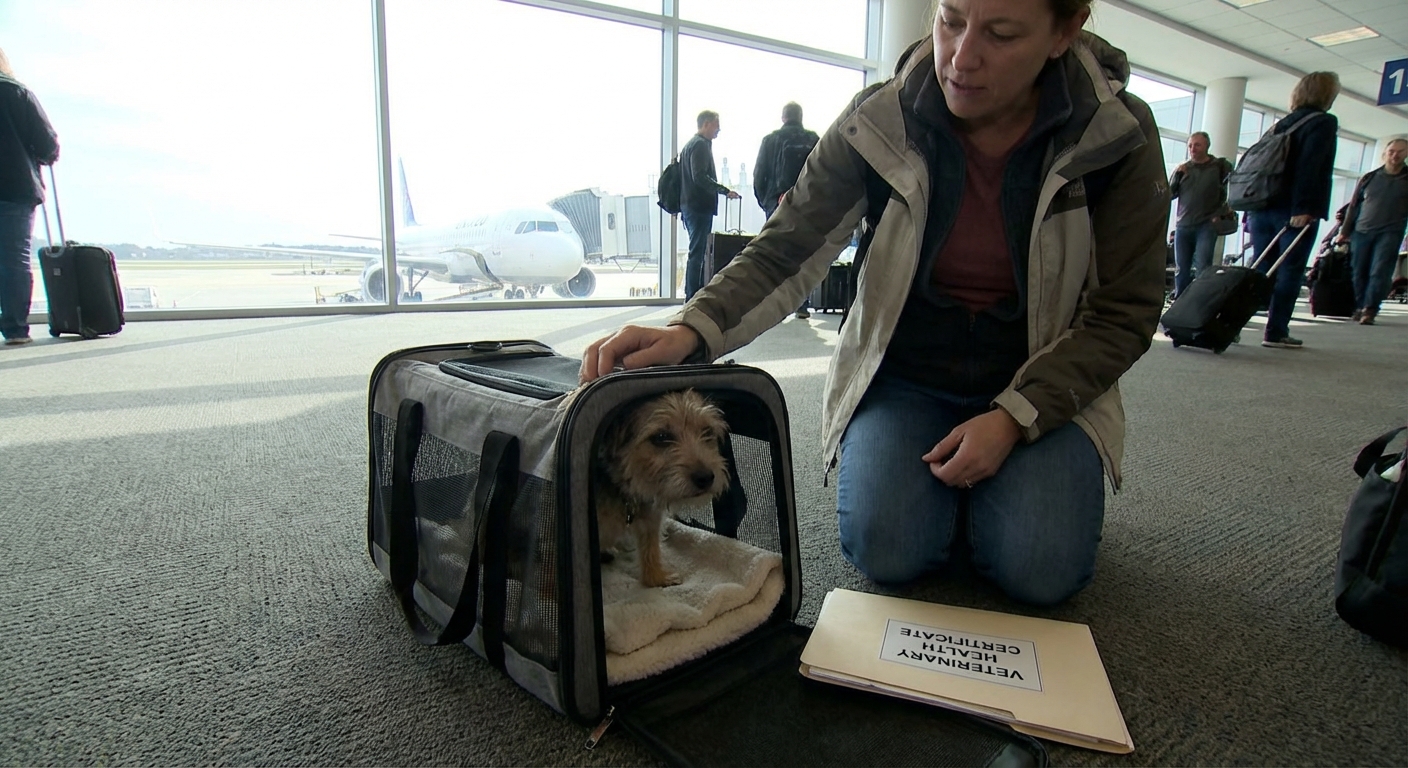
Flying with a dog can feel intimidating—even for seasoned travelers. Airline rules, carrier sizes, health requirements, and your dog’s comfort all have to line up perfectly. The good news: with thoughtful prep and some insider tricks, air travel can be safe and surprisingly smooth for many dogs.
Introduction
This guide pulls together veterinary-backed advice, real-world travel experience, and breed-specific considerations so you can fly with confidence.
Step 1: Decide If Your Dog Should Fly
Before you book a ticket, ask: is flying the kindest option for this specific dog?
Health and Age Checklist
Consult your vet if your dog is:
- Under 12 weeks or a very small toy breed puppy
- Senior (generally 8+ years, depending on breed)
- Living with chronic disease (heart disease, respiratory issues, diabetes, seizure disorders)
- On sedating medications or anxiety meds
Your vet may recommend extra precautions or suggest an alternative plan—like leaving your dog with a trusted sitter or using a professional pet transport service for complex moves.
Breed-Specific Risk Factors
Some breeds tolerate air travel better than others.
- Brachycephalic (short-nosed) dogs: Pugs, French Bulldogs, English Bulldogs, Boxers, Shih Tzus, Boston Terriers and Pekingese are at higher risk of breathing problems in stressful or hot environments. Most vets recommend cabin-only travel for these breeds, and many airlines ban them from cargo.
- Giant breeds: Great Danes, Mastiffs, Newfoundlands and Saint Bernards can be too big for in-cabin travel and may exceed cargo kennel limits. For these dogs, ground transport may be safer and less stressful.
- Highly anxious or noise-sensitive breeds: Border Collies, Australian Shepherds, Belgian Malinois and some terriers may find the airport environment overstimulating. With training and management, many still fly successfully—but you’ll need to prepare more.
If your dog is medically fragile, brachycephalic or very nervous, ask your vet to weigh in on whether air travel is truly in their best interest.
Step 2: Choose the Right Flight and Airline
Cabin vs. Cargo Travel
- In-cabin (under-seat carrier): Best choice for most small dogs. Your dog must meet the airline’s weight and size limits and remain in the carrier.
- Checked baggage / Cargo (crated in the hold): Used for larger dogs or when cabin space is full. While thousands of dogs fly safely in cargo each year, the risks and stress are higher: temperature changes, noise, and handling.
Whenever possible, choose cabin travel.
What to Look For in an Airline
Compare airlines on:
- Pet policies: What are the size, weight and breed restrictions? Cabin vs. cargo rules?
- Temperature and season restrictions: Many airlines restrict cargo pets in very hot or cold weather.
- Dedicated pet programs: Some carriers have specialized pet programs with climate-controlled vehicles, trained staff and tracking.
Real-world tip: Join breed-specific Facebook groups or forums (e.g., "Flying With Frenchies") and search for airline names. You’ll find up-to-date experiences people have had with specific routes and carriers.
Step 3: Get Travel-Ready at the Vet
Plan a vet visit 2–4 weeks before travel (earlier for international trips).
Essentials to Discuss
- Health certificate: Many airlines and destinations require a certificate issued within 10 days of travel.
- Vaccines and parasite control: Rabies and core vaccines should be up to date; discuss flea, tick, and heartworm prevention.
- Microchip and ID: A microchip registered with your current contact info is strongly recommended. For EU and many international destinations, a microchip is mandatory.
- Sedation and anxiety: Most veterinarians do not recommend heavy sedation for flying, especially in cargo, because it can depress breathing and affect balance. Instead, ask about:
- Mild anti-anxiety meds (e.g., trazodone, gabapentin) when appropriate
- Test dosing at home before flight day
- Non-drug aids like pheromone sprays and training
Step 4: Pick the Right Travel Carrier or Crate
In-Cabin Soft-Sided Carriers
For under-seat travel, look for:
- Airline-approved dimensions (each airline publishes max sizes)
- Flexible top that can compress slightly to fit under seats
- Ventilation on at least 3 sides
- Sturdy zippers that your dog can’t push open
- Washable pad with room for a pee pad underneath
Popular options to compare:
- Sherpa Original Deluxe: Widely accepted, classic design, good ventilation.
- Sleepypod Air: Premium build, crash-tested in car tests, flexible length.
- Amazon Basics / budget carriers: Often fine for occasional use—check stitching and zippers carefully.
Cargo Crates
If your dog must fly in cargo, an IATA-compliant hard crate is non-negotiable. Look for:
- Sturdy, one-piece molded plastic body
- Metal door that locks securely
- Ventilation on all sides
- Enough room to stand, turn and lie down comfortably
Crate-train months ahead so your dog sees the crate as a safe den, not a punishment.
Step 5: Training Your Dog for Flight
4–8 Weeks Before Travel
Carrier or crate love
- Feed meals in the carrier/crate. - Toss treats inside and reward relaxed behavior. - Build up from seconds to hours of quiet resting.
Noise desensitization
- Play airport sounds or airplane white noise at low volume while feeding or playing. - Gradually increase volume over weeks.
Handling practice
- Gently handle paws, ears, tail and collar. - Lift them in and out of the carrier (for small dogs), pairing with treats.
Short dry runs
- Take your dog for short car rides in the carrier. - Sit in a busy parking lot to simulate activity and movement.
Highly trainable breeds (Border Collies, Poodles, Labs, German Shepherds) often adapt quickly with consistent work. Independent or sensitive breeds (Shiba Inus, Chows, some sighthounds) may need slower, more patient progress.
Step 6: Flight Day Logistics
The Day Before
- Double-check airline pet booking and seat assignment (avoid bulkhead rows where under-seat storage can be limited for in-cabin pets).
- Prepare a labeled bag with:
- Food in a labeled container
- Collapsible water bowl
- Extra leash and harness
- Waste bags and cleaning wipes
- Copy of vet records and health certificate
Food, Water and Exercise
- Offer a light meal 4–6 hours before departure.
- Long walks or play sessions help expend nervous energy.
- Offer water but avoid overfilling—schedule a bathroom break right before heading to the airport.
At the Airport
- Use pet relief areas just before security and, if possible, during layovers.
- At security, you’ll typically:
- Remove your dog from the carrier.
- Send the empty carrier through the x-ray.
- Walk your dog through the metal detector on a leash or carry them.
Keep ID tags on at all times and use a well-fitted harness plus leash so a nervous dog can’t back out.
In-Flight Comfort and Safety
In-Cabin Dogs
- Keep the carrier under the seat as required during taxi, takeoff and landing.
- Talk calmly to your dog; avoid fussing excessively, which can reinforce anxiety.
- Use a chew or stuffed Kong to keep them occupied.
- Avoid opening the carrier in-flight—nervous dogs can bolt.
Cargo Dogs
You won’t have direct access, so preparation is everything:
- Attach a water bowl that clips to the crate door.
- Use absorbent bedding with a pee pad underneath.
- Label the crate with:
- "LIVE ANIMAL" stickers (most airlines provide these)
- Your name, phone, destination address
- A photo of your dog (helpful if they were to escape)
Ask the gate agent to confirm your dog is loaded before takeoff.
After Landing: Helping Your Dog Recover
Once you land:
- Head to the pet relief area immediately.
- Offer water in small amounts.
- Watch for signs of distress:
- Excessive panting or drooling
- Lethargy, collapse
- Vomiting or diarrhea
- Pale or bright red gums
If something seems off, seek a vet ASAP, especially in hot or cold conditions.
Most dogs bounce back quickly with a familiar routine: a quiet nap, normal meal schedule and a low-key first day.
When Flying Isn’t the Best Option
Sometimes, the kindest choice is not to fly at all. Consider alternatives if:
- Your dog is brachycephalic and too big for the cabin.
- There are extreme temperatures on your route.
- Your dog has serious health or behavior concerns.
Alternatives
- Road trips in a crash-tested harness or travel crate.
- Professional ground transport (research carefully, ask your vet for recommendations).
- Pet sitters or trusted friends/family at home.
Final Thoughts
Flying with your dog takes more planning than booking a ticket and showing up at the gate. When you match the mode of travel to your dog’s breed, health and personality, work closely with your vet, and train thoughtfully, most healthy dogs can fly safely.
Put your dog’s welfare first, build in extra time and patience, and you and your four-legged co-pilot can rack up miles together—without the turbulence.