
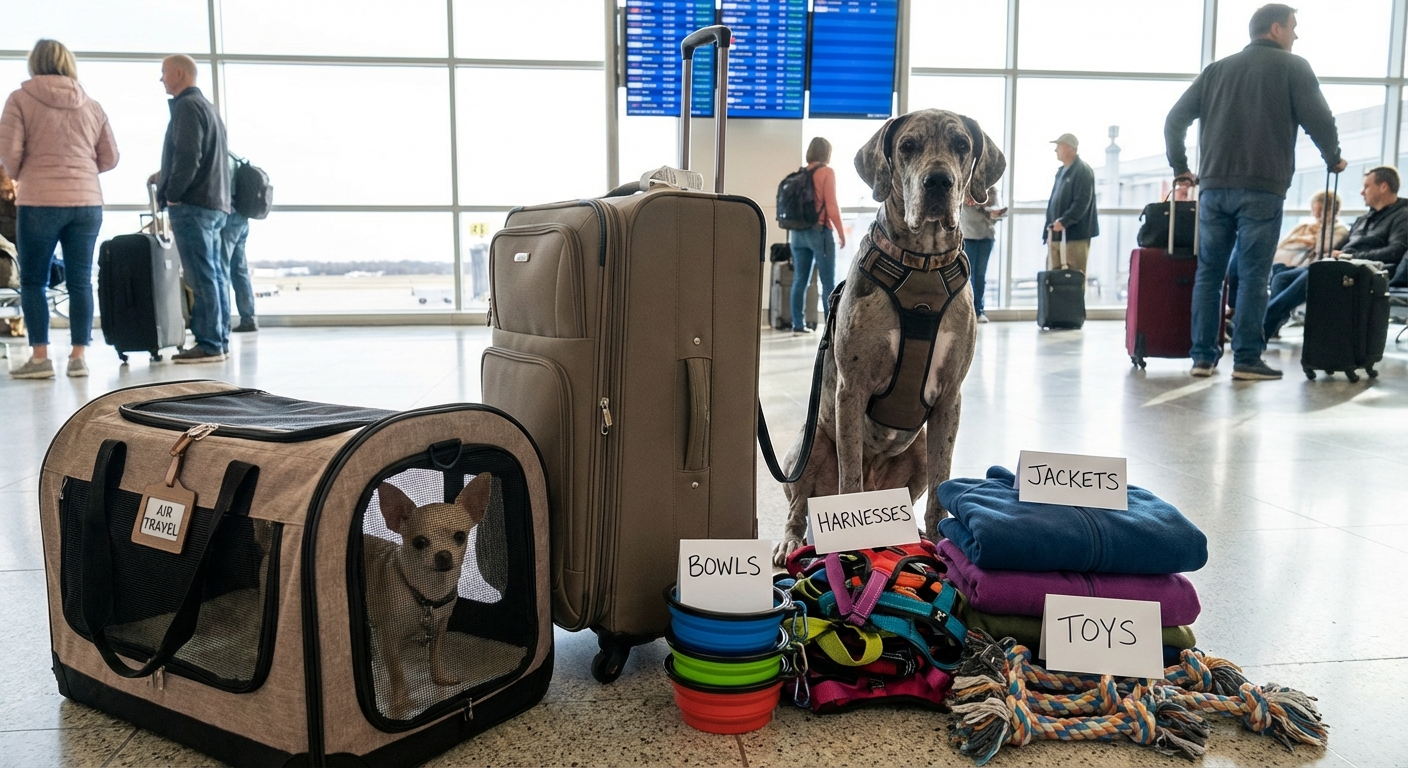
Every dog needs the basics—food, water, ID, and a comfy spot to sleep. But a one-size-fits-all packing list doesn’t work when you’re traveling with a flat-faced Frenchie, a water-obsessed Lab, and a hairless Xolo.
Why Breed Matters When You Pack
Different breeds have different body types, coats, energy levels, and health risks. This guide breaks down smart packing by breed category so you bring what your dog actually needs, not just what looks cute in a travel ad.
Use it as a modular checklist: start with the core essentials, then layer on breed-specific gear.
Core Essentials for Every Traveling Dog
Regardless of breed, always pack:
- Food + measuring cup
- Collapsible water bowl + safe drinking water
- Leash, harness, and flat collar with ID tags
- Poop bags and unscented wipes
- Bed or blanket that smells like home
- Medications and supplements
- Vet records and emergency contacts
Now, let’s customize.
1. Toy & Small Breeds (Chihuahua, Yorkie, Maltese, Pomeranian)
Travel Priorities
- Temperature regulation (they cool and heat quickly)
- Fragility and safety around crowds
- Avoiding low blood sugar (especially in tiny dogs)
Pack This
- Well-fitted harness: Protects delicate necks better than collars.
- Secure carrier or sling: For airports, crowded cities, or long walking days.
- Extra layers: A light sweater or jacket, even in air-conditioned hotels.
- High-calorie treats: Tiny dogs can burn through energy fast—offer small, frequent snacks.
- Pee pads: Useful in hotels or if weather is extreme.
Real-World Tip
Toy breeds get stepped on easily in busy terminals. A structured carrier keeps them safe and prevents strangers from reaching in uninvited.
2. Brachycephalic Breeds (French Bulldog, Pug, English Bulldog, Shih Tzu)
Travel Priorities
- Preventing overheating and breathing stress
- Avoiding extreme exercise and heat
Pack This
- Cooling gear: Cooling vest or bandana for warm climates.
- Portable fan: USB fan to attach to crate or use in hotel rooms.
- Harness (not collar): To protect the airway; no pressure on the neck.
- Short leash: Helps you regulate pace and avoid overexertion.
- Foldable shade canopy: Useful for outdoor events, beaches, or hikes.
Veterinary Note
Many vets discourage flying in cargo with brachycephalic breeds due to higher respiratory risk. If you must fly, aim for cabin-only travel, cooler seasons, and always consult your vet.
3. High-Energy Herding & Working Breeds (Border Collie, Australian Shepherd, German Shepherd, Belgian Malinois)
Travel Priorities
- Mental and physical enrichment to prevent frustration
- Safety in stimulating environments
Pack This
- Long line (20–30 ft): Great for safe exploring when off-leash isn’t possible.
- Puzzle toys and food-dispensing balls: To tire the brain on rainy days or hotel evenings.
- Tug toy and fetch toys: Compact outlets for drivey dogs.
- High-value training treats: To reinforce calm behavior in new settings.
- Reflective gear: Harnesses, leashes, or vests for early or late walks.
Real-World Tip
Herding breeds often get overstimulated by kids, bikes, or joggers in tourist areas. Practicing a solid "look at me" and "heel" before travel pays off.
4. Retrievers and Water Lovers (Labrador, Golden Retriever, Portuguese Water Dog)
Travel Priorities
- Safe water play
- Managing wet coats and ear health
Pack This
- Life jacket: Must-have on boats, lakes with currents, or for less confident swimmers.
- Extra towels: You’ll need more than you think.
- Drying robe or absorbent coat: Speeds up drying in cool or damp climates.
- Ear cleaner: Prevents infections after frequent swimming—ask your vet for a good product.
- Floating toys: Safer and more fun than random beach sticks.
Veterinary Note
Labs and Goldens are prone to ear infections. Dry ears thoroughly and use cleaner after swimming days, especially in warm, humid regions.
5. Double-Coated and Cold-Weather Breeds (Husky, Malamute, Samoyed, Newfie)
Travel Priorities
- Heat management in warm climates
- Shedding management in enclosed spaces
Pack This
- Cooling mat and/or vest: To help in hot hotels or cars.
- Portable fan: For extra ventilation.
- High-velocity dryer attachment (if road tripping): Helps after swims or baths.
- Deshedding brush: Quick daily brush-outs keep fur tumbleweeds under control.
- Non-slip travel bowl: Big paws can send light bowls flying.
Real-World Tip
Shaving double-coated breeds usually isn’t recommended; it can damage coat structure and worsen heat tolerance. Focus on shade, air flow, and cooling products instead.
6. Sleek, Thin-Coated Breeds (Greyhound, Whippet, Italian Greyhound, Pit Bull)
Travel Priorities
- Staying warm, especially at night or in A/C
- Skin protection
Pack This
- Fitted sweaters and/or coats: Even in mild weather, these dogs chill easily.
- Pajamas or lightweight sleep shirt: For cool hotel rooms or cabins.
- Paw balm or boots: For hot pavement, rocky trails, or salted winter roads.
- Soft bed or extra padding: Bony hips and elbows appreciate cushioning.
Veterinary Note
Short-coated, light-skinned dogs can sunburn. If you’re heading to sunny destinations, talk to your vet about pet-safe sunscreen for noses and thin-furred areas.
7. Scent Hounds (Beagle, Basset Hound, Coonhound, Dachshund)
Travel Priorities
- Managing impulses to follow noses
- Preventing ear and back issues (especially in long-backed breeds)
Pack This
- Secure harness: Many hounds are escape artists; look for no-slip harnesses.
- Long line: Allows sniffing without disappearing into the woods.
- High-value recall treats: Smelly, soft rewards to compete with wildlife scents.
- Ear wipes/cleaner: For floppy-eared breeds prone to wax and infections.
- Ramps or steps: For Dachshunds or long-backed breeds to avoid jumping off beds or SUVs.
Real-World Tip
Never rely on recall in unfamiliar, wildlife-rich areas with strong-nosed hounds. A long line allows freedom without the heart attack.
8. Guardian and Protection Breeds (Rottweiler, Doberman, Cane Corso, Livestock Guardians)
Travel Priorities
- Clear structure and management in busy environments
- Avoiding conflict with strange people or dogs
Pack This
- Sturdy, well-fitted harness and collar: Redundant safety.
- Muzzle (if trained): Helpful tool in crowded or unpredictable situations; shouldn’t be a last-minute idea.
- Place mat or bed: A portable "safe spot" for them to settle in hotels and patios.
- Signaling gear: "Do Not Pet" patches for dogs who don’t enjoy strangers.
Trainer Note
These breeds thrive with clear guidance. Practice leash manners and impulse control games before travel. You’re your dog’s advocate—never be afraid to say "no" to petting requests.
9. Seniors and Special-Needs Dogs (Any Breed)
Travel Priorities
- Comfort and mobility
- Medication schedules
Pack This
- Orthopedic travel bed: Extra cushioning for stiff joints.
- Ramps or steps: To get in/out of cars or onto beds.
- Non-slip socks or booties: For slick hotel floors.
- Pill organizers and reminders: Consistent dosing is key.
- Pee pads and cleanup supplies: In case of accidents.
Veterinary Note
Ask your vet about joint supplements, pain control and realistic activity levels. A dog with arthritis may enjoy more frequent, shorter walks instead of long hikes.
10. The Minimalist vs. Maximalist Packing Debate
Some owners travel ultra-light; others bring half the house. The sweet spot is "enough to keep your dog safe, healthy, and happy" without unnecessary bulk.
Questions to guide you:
- What does my dog need for health or safety because of their breed/age?
- What items will prevent predictable problems (like ear infections, overheating, or escape attempts)?
- What actually gets used at home regularly?
Start with a shared packing list for multi-dog households, then add breed-specific columns.
Final Thoughts
Breed isn’t everything—individual personality and health matter just as much. But understanding your dog’s built-in tendencies and vulnerabilities helps you pack smarter and avoid preventable issues on the road.
Chihuahuas and Great Danes won’t share a suitcase any time soon, and that’s the point. Build your dog’s travel kit around their body, brain, and lifestyle, and every trip becomes easier, safer, and more enjoyable for both of you.