
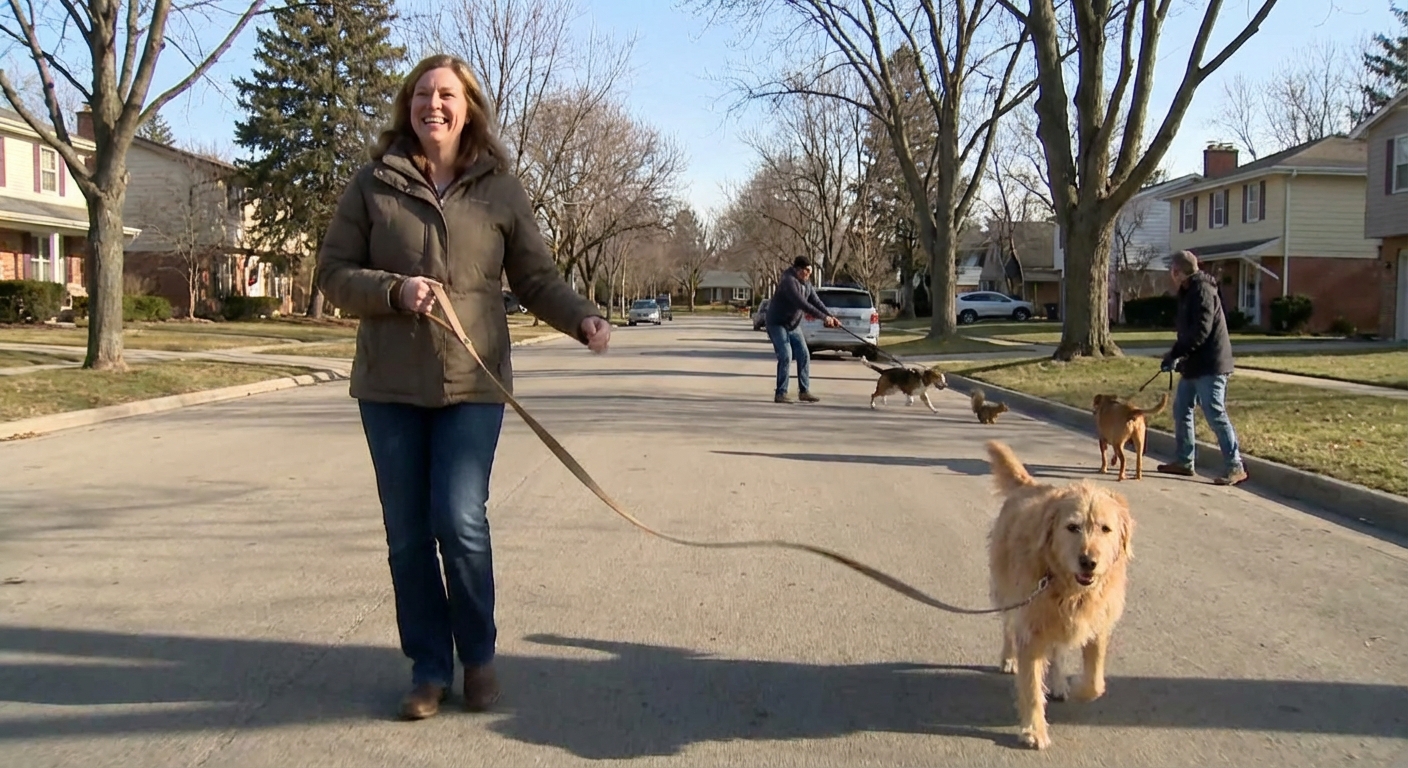
If walks feel more like water-skiing behind your dog than a relaxing outing, you’re not alone. Pulling on leash is one of the most common complaints trainers and veterinarians hear.
Why Your Dog Pulls (And Why It’s Not Stubbornness)
The good news: your dog isn’t being dominant or defiant—they’re just doing what works. Pulling gets them where they want to go faster. Our job is to teach them that keeping the leash loose is what pays off.
This guide breaks down a practical, step-by-step plan with breed-specific insights and product comparisons to help you reclaim your shoulders.
Step 1: Choose the Right Gear for Your Dog
Harness vs. Collar
Veterinary and behavior organizations increasingly recommend harnesses for most dogs, especially:
- Small breeds (Yorkies, Chihuahuas) prone to tracheal collapse
- Brachycephalic breeds (Pugs, Bulldogs, Shih Tzus) with airway issues
- Strong pullers (Huskies, Labs) who risk neck strain
Flat collars are fine for ID tags and well-mannered walkers, but not as the main solution for serious pullers.
Popular No-Pull Harness Styles (Compared)
- Front-Clip Harnesses (e.g., PetSafe Easy Walk, Ruffwear Front Range)
- Clip attachment at the chest.
- When a dog pulls, they turn slightly toward you, reducing force.
- Best for: Medium to large breeds (Labradors, Boxers, Doodles) who are strong but not out of control.
- Y-Front Harnesses with Dual Clips (e.g., 2 Hounds Freedom, Balance Harness)
- Clips at both front and back; can use a double-ended leash.
- Distributes pressure more evenly.
- Best for: Deep-chested breeds like Greyhounds, Whippets, and Dobermans.
Back-Clip Harnesses
- Comfortable and easy to put on. - Fine for dogs who don’t pull much. - Less ideal for serious pullers, as the sensation can encourage them to lean in.
Avoid choke chains, prong collars, and shock collars. These can cause pain, fear, and long-term behavioral fallout. Many vets and behaviorists consider them unnecessary with modern training methods.
Step 2: Decide What “Good Walking” Means to You
You don’t need a formal obedience heel to have great walks.
Pick your goal:
- Casual loose-leash walk: Dog can sniff and move around but doesn’t drag you.
- Side-specific walk: Dog stays mostly on one side (useful for city sidewalks and strollers).
- Formal heel: Dog’s shoulder at your leg, watching you. Great for sports but not required for daily life.
For most pet owners, a casual loose-leash walk is ideal.
Step 3: Start Indoors or in the Yard
Trying to teach leash manners for the first time in a busy neighborhood is like learning to drive on a freeway. Start where it’s boring.
The “Follow the Cookie” Game
- Clip the leash on your dog indoors.
- Hold a treat at your leg, let your dog nibble as you take a few steps.
- Say a cue like “Let’s go” as you move.
- After a few steps, feed the treat fully and praise.
Repeat until your dog naturally hangs near your side when you say “Let’s go.” Then fade the constant treat lure; only reward every few steps.
Step 4: The Golden Rule—Tight Leash = No Go, Loose Leash = Party
Dogs repeat what works. If pulling moves them forward, they’ll keep pulling.
The Stop-and-Stand Method
- Walk forward.
- The moment the leash goes tight, stop like a tree.
- Wait quietly. No yanking, no begging.
- When your dog turns back or the leash slackens, mark (“Yes!”) and move forward.
Over time, your dog learns: pulling makes the walk stop; staying close keeps it going.
Pro tip: Combine this with rewarding your dog before they reach the end of the leash—catch them doing it right.
Breed-Specific Tips for Pullers
Sporting Breeds (Labradors, Goldens, Vizslas)
These dogs were bred to move all day. Expect energy, not malice.
- Add pre-walk play (fetch, tug, short training) to take the edge off.
- Use high-value treats outdoors—kibble may not cut it.
Working and Herding Breeds (German Shepherds, Aussies, Border Collies)
Extremely smart and task-driven.
- Turn walking into a job: ask for sits at curbs, check-ins at corners.
- Use puzzle feeders and training sessions to satisfy mental needs so walks aren’t their only outlet.
Sled and Northern Breeds (Huskies, Malamutes)
Genetically engineered to pull into pressure.
- Front-clip or dual-clip harnesses are often essential.
- Practice more in low-distraction areas and use jackpot rewards for loose leash.
Toy Breeds (Maltese, Yorkies, Pomeranians)
They can pull too—and small necks are fragile.
- Always use a well-fitted harness.
- Keep sessions short; they tire quickly.
- Watch for stress signals: lagging behind, panting, shivering.
Step 5: Add Check-In and Focus Games
A dog who glances back at you on walks is easier to handle.
Check-In Game
- On a walk in a quiet area, say nothing.
- When your dog chooses to look at you, mark and treat.
- Repeat—soon your dog will look at you frequently for fun.
1–2–3 Game (From Veterinary Behaviorists and Fear-Free Trainers)
- Say “One, two, three” as you walk.
- On “three,” drop a treat at your foot.
- Repeat as you approach known trigger spots (busy corners, other dogs across the street).
This creates a predictable pattern and helps anxious or reactive dogs stay focused.
Step 6: Use Real-World Rewards
Not all dogs are food-obsessed. Some value environmental rewards more.
- Dog wants to sniff a lamppost? Ask for a brief sit or eye contact, then release: “Go sniff!”
- Dog wants to greet a friend? Only move forward when the leash is loose.
This is powerful for dogs like Beagles or Spaniels who are super motivated by smells.
Common Mistakes to Avoid
- Inconsistent rules: Sometimes you let pulling slide, other days you enforce. Dogs get confused.
- Too long, too fast: Expecting a one-hour perfect walk from a beginner dog.
- Under-paying: Using boring kibble in a squirrel-rich park.
- Skipping the vet check: Pain (hips, spine, arthritis) can make dogs forge ahead or lag behind.
If your dog suddenly starts pulling more, limping, or changing gait, schedule a vet visit before adjusting training.
When to Get Professional Help
Consider contacting a force-free trainer or veterinary behaviorist if:
- Your dog is reactive (lunging, barking) at dogs, people, or cars.
- You feel afraid you’ll be pulled over or injured.
- You’ve tried consistently for a few weeks with little to no improvement.
Look for credentials like KPA CTP, CCPDT-KA, IAABC, and ask what methods they use. Avoid anyone who relies on pain, fear, or dominance language.
Building a Loose Leash Legend, Step by Step
- Start with the right harness and leash for your dog’s size and shape.
- Practice indoors, then slowly move to more distracting environments.
- Be a consistent “tree” when the leash goes tight, and a generous slot machine of rewards when it stays loose.
Do this, and your dog won’t just walk beside you—they’ll walk with you. And that’s when even the most routine neighborhood strolls start to feel like the best part of your day.