
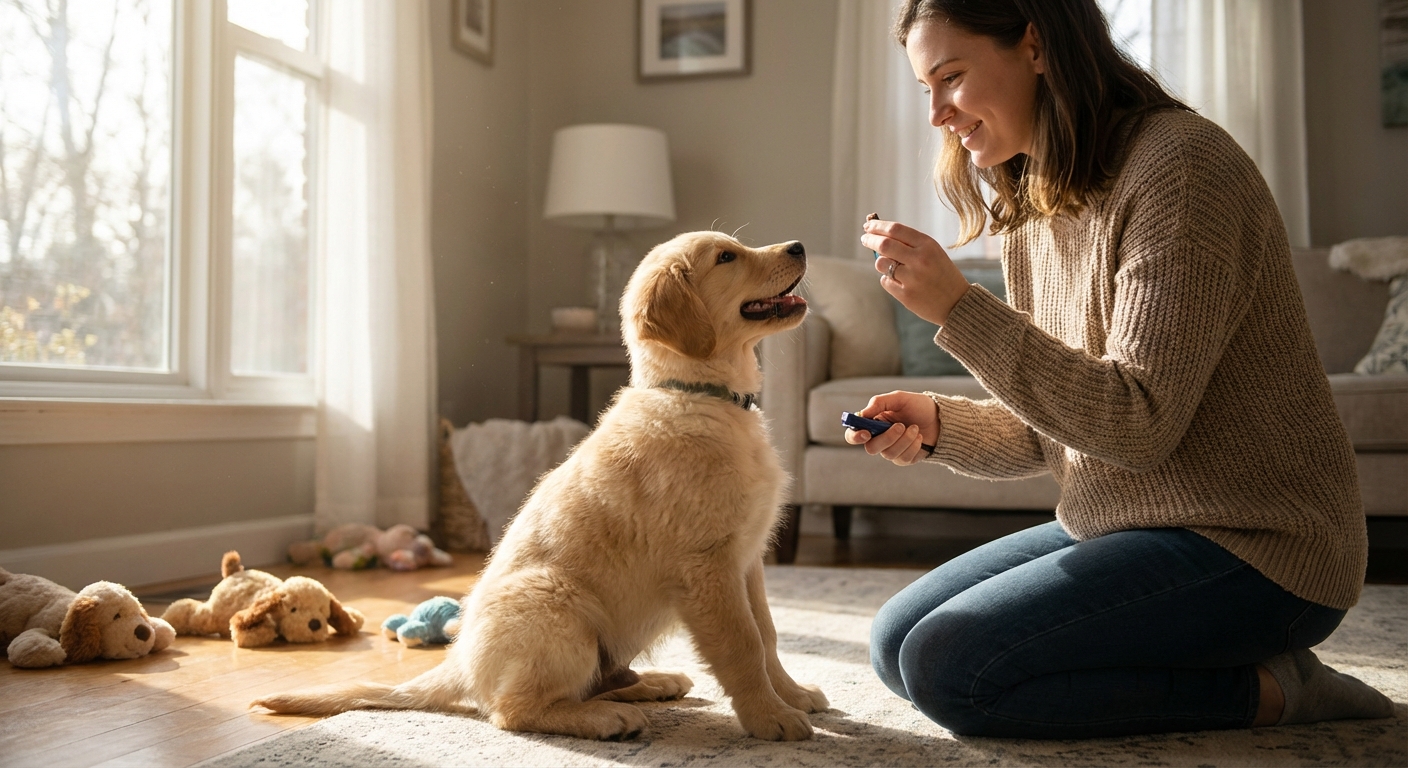
Dog training doesn’t have to feel like a chore or a battle of wills. Done right, it becomes one of the best ways to bond with your dog, build their confidence, and keep them safe.
Welcome to Training That Feels Good (For Both of You)
This guide walks you through a simple, science-backed framework you can use with any dog—whether you’ve got a boisterous Labrador puppy, a sensitive Greyhound, or a stubborn but lovable French Bulldog.
The Science Behind Good Training (In Plain English)
Modern dog training is built on positive reinforcement—rewarding behavior you like so your dog offers it more often.
Veterinary behaviorists and organizations like the AVSAB (American Veterinary Society of Animal Behavior) recommend avoiding punishment-based methods (like leash jerks, yelling, or shock collars) because they:
- Increase anxiety and fear
- Can cause aggression or shutdown behavior
- Damage your bond and trust
Instead, focus on:
- Rewarding what you want (treats, toys, praise, sniff breaks)
- Preventing what you don’t want (management: gates, crates, leashes)
- Making good choices easy and bad choices hard
Think of training as teaching your dog a language rather than forcing obedience.
Step 1: Set Realistic Expectations by Breed and Age
Every dog is an individual, but breed tendencies and age matter.
Puppies (8 weeks – 6 months)
- Like toddler humans: short attention spans, need many short sessions.
- Focus on: socialization, potty training, name recognition, coming when called, gentle handling.
- Example: A Golden Retriever puppy may be social and eager to please but easily distracted. Keep sessions to 3–5 minutes, several times per day.
Adolescents (6–24 months)
- Teenagers of the dog world: more energy, more confidence, and often selective hearing.
- Focus on: recall, leash skills, impulse control.
- Example: A Husky adolescent might be brilliant at escaping and ignoring recalls. You’ll need long lines, secure areas, and especially high-value rewards.
Adult Dogs (2–7 years)
- Can learn just as well as puppies, often better due to more focus.
- Focus on: refining manners and teaching fun skills.
- Example: A Border Collie may crave mental work: scent games, trick training, or agility keep their brain satisfied.
Seniors (7+ years)
- May have joint pain, sensory loss, or slower reaction times.
- Focus on: gentle, low-impact training and brain games.
- Example: A senior Pug might prefer nosework and mat training over high-energy fetch.
Step 2: Build Your Dog’s “Training Paycheck”
Before training, figure out what your dog loves.
Food Rewards
- Soft, smelly treats (chicken, cheese, commercial training treats) are usually best.
- For sensitive stomachs, ask your vet about safe options or use part of your dog’s regular kibble.
Toys and Play
- Many herding and working breeds (Border Collies, Malinois, Cattle Dogs) work hard for tug or fetch.
Life Rewards
- Sniffing a bush, greeting a friend, going out the door can all be rewards.
Use better rewards for harder tasks: recall in a dog park should pay more than “sit” in the kitchen.
Step 3: The Core Skills Every Dog Should Know
1. Name Recognition
Goal: Your dog looks at you when you say their name.
How to teach it:
- Say your dog’s name once.
- The moment they glance at you, mark it (say “Yes!” or use a clicker) and give a treat.
- Repeat 10–15 times in a quiet room.
This becomes your attention reset button.
2. Sit and Down
Basic positions help with manners:
- Ask for a sit before meals, at doors, and before crossing streets.
- Use down for settling next to you at cafés or on a mat.
- Large breeds (Great Danes, Mastiffs) may find repeated sits uncomfortable. Mix in stands and downs to protect joints.
Tip by breed:
3. Come When Called (Recall)
This is a life-saving skill.
Starter game:
In your living room, back up a few steps and cheerfully say, “Buddy, come!”
2. When your dog moves toward you, mark and reward generously. 3. Gradually increase distance and add mild distractions.
Breed insight:
- Scent hounds (Beagles, Bassets) can be nose-first and recall-late. Use extra-high-value treats and start in low-distraction environments.
4. Loose-Leash Walking
Your goal isn’t a perfect heel—it’s a walk that doesn’t dislocate your shoulder.
Simple method:
- When the leash is slack, move forward and reward.
- When it gets tight, stop. Wait. When your dog looks back or slackens the leash, mark and reward, then move on.
Product comparison:
- Front-clip harnesses (e.g., Ruffwear Front Range, PetSafe Easy Walk):
- Pros: Reduce pulling, safer for necks.
- Cons: Some dogs dislike pressure; fit matters.
- Back-clip harnesses:
- Pros: Comfy, good for small/toy breeds.
- Cons: Can encourage pulling in strong dogs (like a sled harness).
- Flat collars:
- Fine for ID and walking easygoing dogs.
- Avoid for serious pullers or brachycephalic breeds (Pugs, Bulldogs) due to airway concerns.
Most veterinarians and behaviorists recommend harnesses over choke or prong collars, especially for small dogs and breeds prone to tracheal collapse.
Step 4: Use Short, Fun Sessions
- Train 3–5 minutes at a time, 2–6 times per day.
- End sessions before your dog gets bored.
- Rotate skills: one session recall, one session mat work, one session tricks.
- High-drive breeds (Belgian Malinois, Aussies) may need training and structured exercise to be ready to focus.
- Low-energy breeds (Basset Hounds, Shih Tzus) may do best with micro-sessions and comfy training surfaces.
Energy-level tip:
Step 5: Preventing Common Problems Early
Jumping on People
Dogs jump because it works—they get attention.
- Teach an alternative (sit) and reward that heavily.
- Ask visitors to ignore jumping and only greet when your dog has four paws on the floor.
- Use baby gates or leashes to prevent rehearsing rude greetings.
Mouthing and Nipping (Especially in Puppies)
- Provide chew toys.
- Redirection beats scolding: swap skin/clothes for a toy.
- Freeze and disengage briefly if bites are too hard, then resume play.
Barking
First, identify the cause (alert, boredom, fear, demand). Then:
- Increase mental and physical exercise.
- Teach a “quiet” cue by marking and rewarding short pauses.
- For reactive barking at dogs/people, consider a fear-free trainer or veterinary behaviorist.
When to Call in a Pro
Ask your veterinarian for a referral if you see:
- Growling, snapping, or biting
- Severe fear (cowering, hiding, trembling)
- Resource guarding (over food, toys, people)
Look for:
- Trainers using force-free, positive methods
- Certifications (KPA CTP, CCPDT-KA, IAABC, VTS-Behavior)
- Willingness to collaborate with your vet
Making Training a Habit You Both Love
- Attach training to daily routines: 2 minutes before meals, during commercial breaks, before walks.
- Celebrate small wins—a calmer door greeting or a quicker response to their name is real progress.
- Remember: training is a lifelong conversation, not a six-week class.
With consistent, kind training, you don’t just get better behavior. You get a more confident, relaxed dog—and a partnership that feels less like management and more like friendship.