
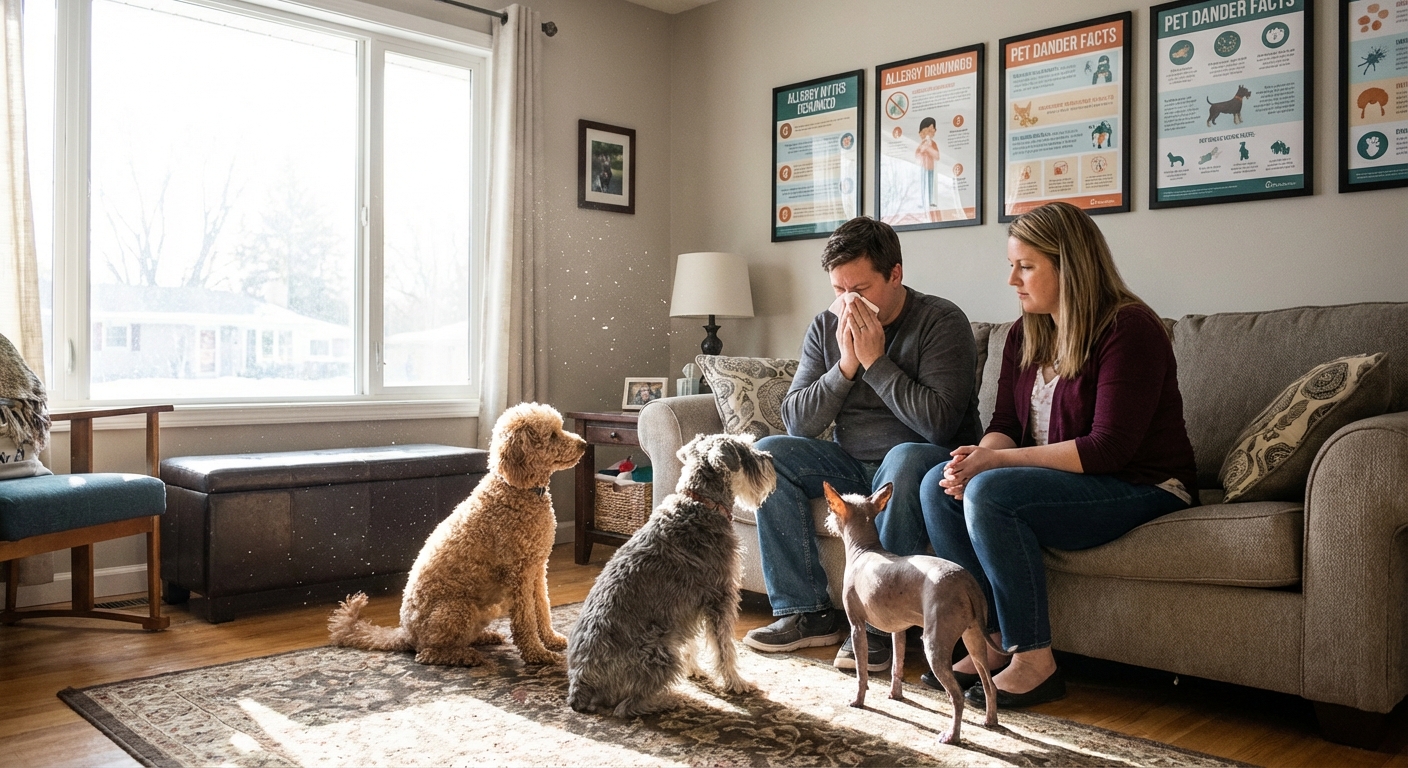
Many dog lovers with allergies go searching for the “perfect hypoallergenic breed” and quickly find Poodles, Schnauzers, and hairless breeds like the Chinese Crested or Xoloitzcuintli. The truth is more nuanced: no dog is completely hypoallergenic, but some breeds and coat types may be more manageable for sensitive owners.
Introduction
This guide compares Poodles, Schnauzers, and hairless breeds with a focus on allergy management, grooming, health, and real-world living so you can make an informed choice.
What Actually Triggers Dog Allergies?
Most people aren’t allergic to fur itself, but to proteins in:
- Dander (dead skin cells)
- Saliva
- Urine
Breeds that shed less may spread fewer allergens around your home, but they still produce them. Individual reactions vary a lot.
Veterinary-backed tip: Before choosing any breed, spend time with adult dogs of that breed (not just puppies). Puppies often trigger fewer symptoms temporarily.
Breed Overviews
Poodle (Toy, Miniature, Standard)
- Coat: Single, curly coat; very low shedding
- Energy: Moderate–high
- Personality: Extremely intelligent, people-oriented, sensitive
Schnauzer (Miniature, Standard, Giant)
- Coat: Double coat; harsh wiry topcoat with softer undercoat
- Energy: Moderate–high (especially Standards and Giants)
- Personality: Alert, often vocal, bright, and loyal
Hairless Breeds (Chinese Crested, Xoloitzcuintli)
- Coat: Largely hairless with variable tufts or a short coat (Xolo)
- Energy: Moderate
- Personality: Affectionate, often velcro-like with their person, can be reserved with strangers
All of these are often recommended for allergy-prone owners—but they come with very different grooming and health needs.
Allergy Friendliness: How They Really Compare
Poodles
- Very low shedding, which can mean fewer allergens on floors and furniture
- Dense curls can trap dander close to the skin until grooming
- Require regular brushing and professional grooming to avoid mats
Some allergy sufferers find Poodles more tolerable than most breeds. Others still react strongly; there is no guarantee.
Schnauzers
- The harsh, wiry coat—when hand-stripped—sheds less into the environment than many double-coated breeds.
- When clipped, the coat can become softer and may shed more dander.
Miniature Schnauzers are particularly popular among allergy-aware households, but individual reactions vary.
Hairless Breeds
- No shedding hair to carry dander around the home
- Dander is still present on the skin and in saliva
- Some people find hairless breeds easiest to manage; others react to skin flakes regardless.
Real-world advice: Consider arranging a home trial or extended visit through a responsible breeder or rescue when possible. Your body’s reaction is the most honest test.
Grooming and Skin Care: A Deeper Dive
Poodles
- Brushing: Several times per week to prevent mats
- Professional grooming: Every 4–8 weeks (clipping, bathing, nail and ear care)
- Products: Hypoallergenic shampoos for sensitive skin; quality detangling spray
Neglected coats can mat down to the skin, trapping moisture and causing infections—an issue vets and groomers see frequently.
Schnauzers
- Hand-stripping vs clipping:
- Hand-stripping preserves the wiry texture and can reduce shedding
- Clipping softens the coat; may increase shedding slightly but is easier for many pet owners
- Face and leg furnishings: Need regular combing to prevent tangles and food buildup.
Schnauzers also need regular ear, nail, and dental care—as do all breeds.
Hairless Breeds
- Skin care: More akin to human skincare than traditional dog grooming:
- Gentle bathing to avoid oil buildup
- Moisturizing to prevent dryness
- Sunscreen or protective clothing outdoors to prevent sunburn
- Clothing: Often need sweaters or coats in cold climates.
Product comparison: Grooming & skin essentials
- Poodles & Schnauzers: High-quality slicker brush, metal comb, coat-specific shampoo
- Hairless breeds: Hypoallergenic, fragrance-free cleanser, dog-safe moisturizer, pet-safe sunscreen, soft clothing
Ask your veterinarian to recommend dermatologist-approved products tailored to your dog’s skin.
Health Profiles: Beyond Allergies
Poodles
- Common issues:
- Hip dysplasia (especially Standards)
- Addison’s disease
- Eye disorders
- Ear infections (from hair and moisture in the ears)
Schnauzers
- Miniature:
- Pancreatitis and hyperlipidemia (high blood fats)
- Bladder stones
- Standard and Giant:
- Hip dysplasia
- Hypothyroidism
- Some cancers
Hairless Breeds
- Chinese Crested and Xoloitzcuintli can be prone to:
- Dental problems (especially hairless Cresteds)
- Skin infections if not properly cared for
- Autoimmune or allergy-related skin conditions in some lines
Veterinary-backed tip: Routine check-ups, dental cleanings, and early screening (hip x-rays, eye exams, bloodwork) help catch issues sooner, especially in genetically predisposed breeds.
Lifestyle and Temperament Fit
Poodles
- Extremely smart and sensitive; they need mental stimulation and kind handling
- Great candidates for obedience, agility, and therapy work
- Can become anxious or destructive if bored or left alone too long
Schnauzers
- Alert and often vocal; great watchdogs but may annoy noise-sensitive neighbors
- Need consistent training to curb nuisance barking
- Miniatures suit many urban homes; Standards and Giants need more space and exercise
Hairless Breeds
- Often velcro dogs, happiest when near their person
- Can be reserved with strangers; early socialization is crucial
- Sensitive to extremes of temperature, so less suited to very cold or very sunny outdoor lifestyles without protection
Real-world advice: If you want a low-maintenance dog, these are not the easiest picks. Their coat or skin care and need for interaction are significant.
Allergy Management Beyond Breed Choice
Even with a well-chosen breed, allergy management is usually a multi-step plan:
- Work with an allergist. Testing can clarify exactly what you react to and which medications or therapies might help.
- Create dog-free zones. Typically the bedroom, to give your body a rest at night.
Invest in cleaning tools:
- HEPA air purifiers - Vacuum with HEPA filter - Washable throw blankets on furniture 4. Bathe and groom regularly. Ask your vet for a safe bathing schedule—over-bathing can dry out skin and increase dander. 5. Use washable dog beds and covers. Wash weekly in hot water if possible.
These strategies can make almost any dog more tolerable—even if your allergies limit which breeds you consider.
Quick Comparison: Which Might Suit You?
- Choose a Poodle if you:
- Want an athletic, highly trainable, low-shedding dog
- Are okay with frequent professional grooming
- Enjoy training and mental enrichment activities
- Choose a Schnauzer if you:
- Prefer a more traditional, bearded look with moderate shedding (when well maintained)
- Can handle alert barking and enjoy a watchdog personality
- Want size options from small (Mini) to large (Giant)
- Choose a Hairless Breed if you:
- Are prepared for skincare, sunscreen, and clothing management
- Live in a climate where extreme cold or heat can be managed
- Prefer very little hair in your environment
Final Thoughts
Poodles, Schnauzers, and hairless breeds can be fantastic companions for allergy-conscious dog lovers—but there’s no universal “allergy-proof” dog.
Spend time with the breeds you’re considering, get your allergist and veterinarian on the same page, and be realistic about grooming and skincare. With the right match and a thoughtful allergy-management plan, sharing your home with a dog you love is often still possible.