
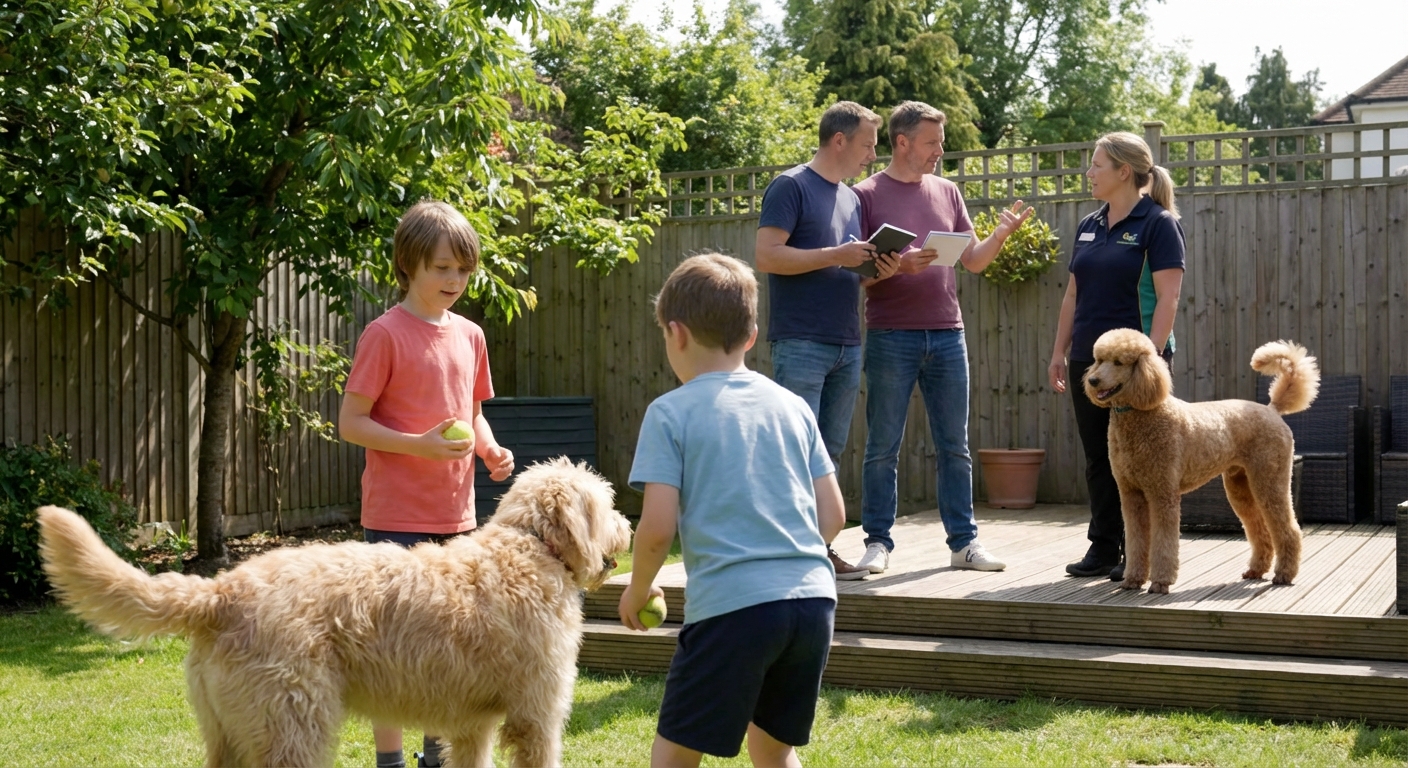
Goldendoodle or Golden Retriever? Labradoodle or Labrador? "Doodle" mixes are everywhere, and many families are torn between a designer hybrid and a classic purebred. Both paths can lead to a fantastic companion—but they come with different health, grooming, and training realities.
Introduction
This guide compares popular doodles (like Goldendoodles and Labradoodles) with their purebred parents (Golden Retrievers, Poodles, and Labradors) so you can make a confident, informed choice.
The Breeds at a Glance
Popular Doodles
- Goldendoodle: Golden Retriever × Poodle
- Labradoodle: Labrador Retriever × Poodle
- Bernedoodle: Bernese Mountain Dog × Poodle
General traits:
Friendly, social, usually highly trainable, often lower shedding than many purebreds, but not guaranteed hypoallergenic.
Core Purebreds in the Mix
- Poodle (Standard/Miniature) – Intelligent, athletic, low-shedding coat, can be sensitive, needs mental stimulation.
- Golden Retriever – Affectionate, people-pleasing, moderate shedding, prone to some hereditary conditions like hip dysplasia and certain cancers.
- Labrador Retriever – Outgoing, energetic, heavy shedders, can be prone to obesity and joint issues.
Temperament: What Families Really Experience
Doodles
Pros:
- Often inherit Poodle’s intelligence and retriever friendliness
- Frequently great with kids and other dogs (with proper socialization)
- Highly trainable and food-motivated
- Energy can be very high in first-generation crosses
- Smart dogs get bored fast—boredom can lead to chewing, digging, barking
- Temperament is less predictable than a well-bred purebred
Watch-outs:
Purebred Retrievers & Poodles
Golden & Labrador Retrievers:
- Classic “family dogs” with steady, social temperaments
- Eager to please; great for first-time dog owners
- Energy can be intense, especially Labs under 3 years
- Exceptionally intelligent and sensitive
- Bond closely with their families
- May be more reserved with strangers than retrievers
Poodles:
Veterinary-backed tip: Many vets report behavioral predictability is generally higher in responsibly bred purebreds, because generations are selected for stable temperaments and health-tested lines.
Coat, Shedding, and Grooming Reality Check
This is where expectations and reality often clash.
Doodles
- Shedding: Often low to moderate; NOT reliably non-shedding
- Coat types: Wavy, curly, or somewhere in between—even within the same litter
- Grooming needs: High. Expect:
- Professional grooming every 6–8 weeks
- Daily to every-other-day brushing to prevent painful matting
- Regular sanitary trims, ear cleaning, and nail care
Matted doodle coats are one of the most common grooming emergencies; many groomers end up needing to shave severely matted dogs.
Purebreds
- Golden & Lab: Heavy seasonal shedders; require weekly brushing, more during spring/fall blowouts; fewer expensive grooming visits.
- Poodles: Very low shedding, but grooming needs are as intense—or more—than doodles. They almost always require professional grooming.
Product comparison: Grooming essentials
- For doodles & Poodles:
- Slicker brush with soft pins for curls/waves
- Metal comb to check for hidden mats
- High-quality detangling spray
- For Goldens & Labs:
- Undercoat rake or de-shedding tool
- Bristle brush for shine
When in doubt, your vet or a certified groomer can recommend coat-safe tools for your individual dog.
Health: Hybrid Vigor vs Reality
You may have heard: "Mixed breeds are automatically healthier." That’s an oversimplification.
Doodles
Doodles can inherit health risks from both parent breeds, including:
- Hip and elbow dysplasia
- Eye diseases (PRA, cataracts)
- Allergies and skin issues
- Ear infections (due to hair and moisture in floppy ears)
- Certain cancers (depending on the mix)
A responsible doodle breeder should health-test both parents for the same hereditary conditions purebred breeders test for.
Purebreds
- Goldens: Higher risk of certain cancers, hip dysplasia, and heart disease in some lines.
- Labs: Hip/elbow dysplasia, obesity, cruciate ligament tears, some eye diseases.
- Poodles: Addison’s disease, eye problems, bloat (gastric dilatation-volvulus), some autoimmune conditions.
Veterinary-backed tip: Ask for OFA (Orthopedic Foundation for Animals) and eye exam results for parents, doodle or purebred. The presence of test results is more important than whether the dog is a mix or purebred.
Cost of Ownership: Beyond the Purchase Price
Purchase or Adoption
- Doodles from breeders: Typically higher initial cost due to designer demand
- Purebreds from reputable breeders: Also costly but usually include health testing and early socialization
- Rescue/shelter: Often lower fees; many doodles and purebreds end up in rescue due to grooming, energy, or behavior mismatches
Lifetime Costs
- Doodles:
- More frequent grooming ($$ over the years)
- Possible allergy and ear care expenses
- Retrievers:
- Budget for quality joint support, especially in later life
- Strong focus on weight management to prevent orthopedic issues
- Poodles:
- Grooming costs similar to or higher than doodles
- Potential for chronic conditions needing long-term medication
Insurance tip: Pet insurance can be worthwhile for breeds and mixes prone to orthopedic or chronic illness. Compare policies that cover hereditary conditions and not just accidents.
Training & Exercise: Matching Energy to Your Lifestyle
Energy Levels
- Labradors & young Goldens: High to very high
- Most doodles: Similar or higher—especially first- and second-generation crosses
- Poodles: High energy but often satisfied with mentally rich activities
Expect to commit to at least 60–90 minutes of daily exercise for most doodles and retrievers, plus training and mental enrichment.
Training Considerations
- Doodles and purebred retrievers tend to thrive in positive reinforcement training.
- Poodles may be more sensitive to tone and handling—gentle, consistent training is crucial.
- Early socialization (people, dogs, surfaces, sounds) is non-negotiable for all.
Real-world advice: If your household is already hectic, consider an adult doodle or retriever from rescue where energy level and temperament are already known, rather than a high-octane puppy.
Which Is Right for You? A Quick Self-Check
Ask yourself:
How much grooming work (and budget) can I commit to?
- Low tolerance: Consider a short-coated Lab from responsible lines. - High tolerance/budget: Doodle or Poodle is possible, but commit to maintenance.
*Do I truly need a low-shedding dog—or just want less hair?
- Allergy concerns? Get tested around adult dogs with similar coats. Remember: no dog is 100% hypoallergenic.
How active is my lifestyle?
- Couch-friendly life? An adult, calmer rescue may beat a doodle or young retriever. - Outdoorsy and active? Many doodles, Labs, Goldens, and Poodles can be ideal partners.
Am I okay with some unpredictability?*
- Purebreds (from good breeders) generally offer more predictable size, coat, and temperament. - Doodles are more variable—even within the same litter.
Final Thoughts
Choosing between a doodle and a purebred isn’t about which is "better"—it’s about what’s best for you and your dog’s future.
- Love grooming and variety? A doodle or Poodle might be perfect.
- Prefer predictability and a classic family dog? A Golden or Lab from health-tested lines is hard to beat.
- Open-hearted and flexible? Check breed-specific rescues—there are wonderful doodles and purebreds waiting for homes.
Whichever you choose, partner with your veterinarian early, invest in training, and commit to meeting your dog’s physical and emotional needs. That’s what truly creates the dream family dog.