
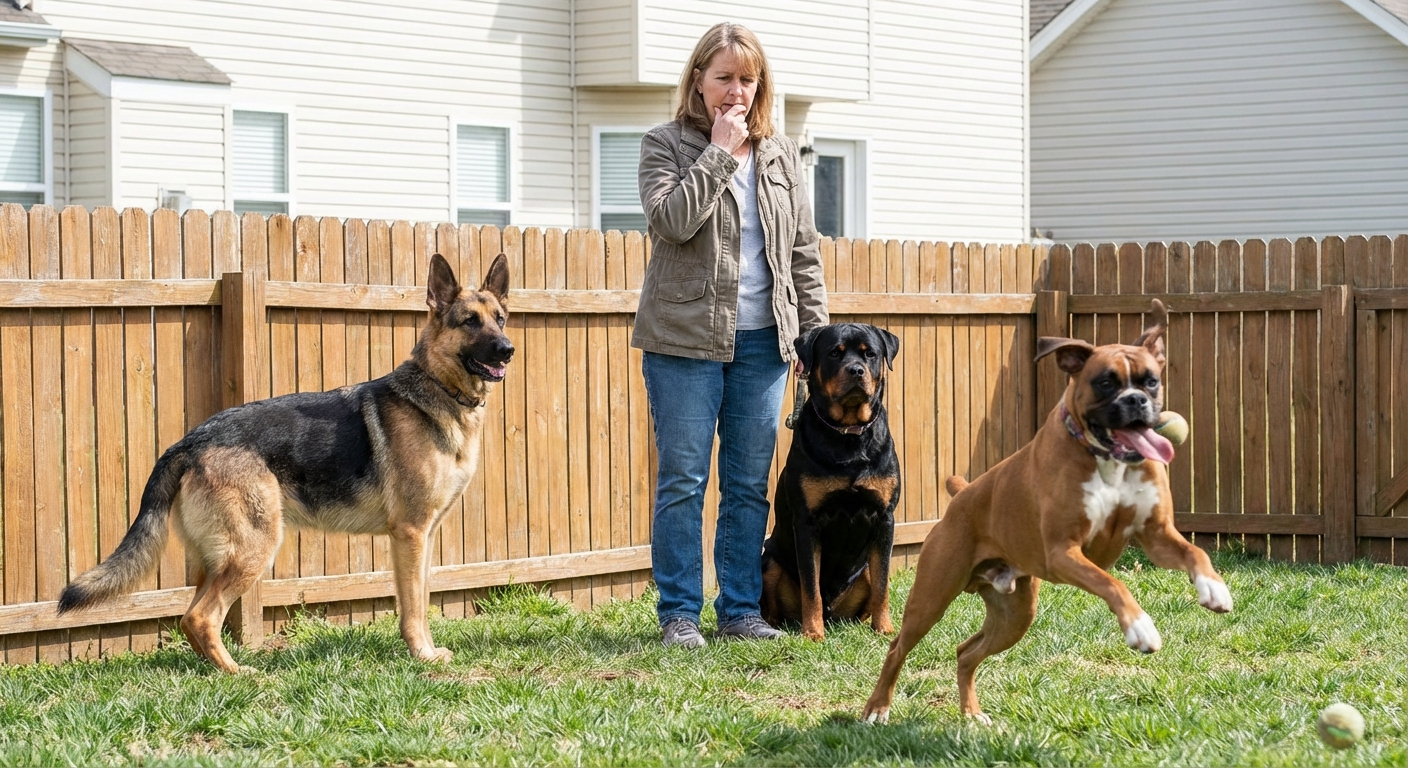
If you’re looking for a medium-to-large dog that can be both protector and family clown, you’ve likely come across German Shepherds, Rottweilers, and Boxers. Each brings loyalty, intelligence, and courage—but they differ in intensity, training needs, and everyday management.
Introduction
This guide compares these three powerful breeds with straightforward, real-world advice so you can choose a dog that fits your home, experience level, and lifestyle.
Breed Profiles at a Glance
German Shepherd Dog (GSD)
- Size: 50–90 lbs
- Energy: High
- Typical roles: Police/military, service dogs, sports (IPO, obedience, agility)
Rottweiler
- Size: 80–135 lbs
- Energy: Moderate–high
- Typical roles: Guarding, protection sports, therapy, family companion
Boxer
- Size: 55–80 lbs
- Energy: High
- Typical roles: Family companion, agility, obedience, therapy
All three are strong, intelligent, and emotionally sensitive, which is a gift in the right hands—and a challenge in the wrong ones.
Temperament: How They Really Live with You
German Shepherd: The Intense Worker
- Highly intelligent and purpose-driven
- Naturally protective and often suspicious of strangers
- Deep bond with their handler; can be prone to anxiety if under-socialized
GSDs thrive when they have a clear job—training, sports, advanced obedience, or regular working tasks at home.
Rottweiler: The Calm Guardian
- Typically confident, steady, and watchful
- Strong guarding instincts; may be aloof with strangers
- Affectionate and playful with family but can be pushy without boundaries
Rotties do best with owners who are calm, consistent leaders—never harsh, but very clear.
Boxer: The Eternal Puppy
- Playful, exuberant, and often clownish well into adulthood
- Usually friendly with people, though still protective of home
- Tends to be very people-oriented and affectionate
Boxers bring big energy and big feelings—they thrive in upbeat, active households.
Veterinary-backed tip: Behavioral problems in all three breeds often stem from boredom + under-socialization. Their intelligence and strength mean behavior problems can escalate quickly if not addressed early.
Exercise and Mental Stimulation Needs
German Shepherd
- Physical: 60–120 minutes/day of structured exercise (walks, training, play)
- Mental: Essential—tracking, obedience, scent games, puzzle toys
Under-exercised GSDs may develop anxiety, reactivity, or destructive habits.
Rottweiler
- Physical: 45–90 minutes/day, often favoring purposeful walks over manic fetch sessions
- Mental: Obedience, scent work, problem-solving games
Many adult Rotties are surprisingly calm indoors if their brains are busy and boundaries are clear.
Boxer
- Physical: 60–120 minutes/day, often in bursts of zoomies and play
- Mental: Training games, puzzle feeders, scent games
Boxers can be clumsy and exuberant; training good manners around kids and older adults is particularly important.
Real-world advice: If you’re not excited about daily training and exercise, any of these breeds can quickly become overwhelming.
Health and Longevity: What Vets Want You to Know
Common Health Concerns
- German Shepherds:
- Hip and elbow dysplasia
- Degenerative myelopathy (a progressive spinal disease)
- Allergies and digestive issues in some lines
- Rottweilers:
- Hip and elbow dysplasia
- Osteosarcoma (bone cancer)
- Heart disease (e.g., aortic stenosis)
- Boxers:
- Heart disease (especially cardiomyopathy)
- Cancers (mast cell tumors, lymphoma)
- Brachycephalic traits in some lines (though much milder than Bulldogs)
Lifespan
- German Shepherd: ~9–13 years
- Rottweiler: ~8–11 years
- Boxer: ~9–12 years
Veterinary-backed tip: Work only with breeders who:
- Perform OFA or PennHIP testing for hips/elbows
- Conduct breed-relevant heart and genetic testing (e.g., for Boxers and Rotties)
- Are transparent about cancer history in their lines
Pet insurance can be especially wise for these breeds due to potential orthopedic and cancer-related costs.
Training and Socialization: Non-Negotiables
All three breeds are powerful and can be protective. Early, thoughtful training is essential.
German Shepherd
- Begin puppy classes as soon as your vet clears you.
- Prioritize neutral, positive experiences with strangers and dogs.
- Focus on impulse control, handler focus, and calm behavior.
Rottweiler
- Start socialization early but safely—quality over quantity.
- Teach impulse control from day one: sit, wait, leave it, polite leash walking.
- Avoid rough, dominance-based methods; they risk triggering fear or aggression.
Boxer
- Channel puppy-like exuberance into constructive outlets: tug, fetch, obedience games.
- Teach polite greetings to prevent jumping and bowling people over.
- Reward calm behavior generously.
Product comparison: Training gear
- Harness: Front-clip harness for loose-leash training
- Long line: For recall games without sacrificing control
- Interactive toys: Kongs, puzzle feeders, snuffle mats to work the brain
Avoid punishment-heavy tools (like prong or shock collars) without guidance from a qualified force-free trainer; these breeds are sensitive as well as strong.
Household Fit: Kids, Space, and Neighbors
With Children
- German Shepherd: Great with children when well-bred and socialized, but herding tendencies may lead to nipping and chasing. Training is critical.
- Rottweiler: Can be incredibly gentle family dogs but must be supervised; their size and strength can be overwhelming for small kids.
- Boxer: Usually kid-loving goofballs; supervision is still key due to exuberance.
Teach kids:
- No riding, pulling tails/ears, or interrupting sleep/food time
- How to recognize stress signs (lip licking, turning away, whale eye)
Space and Environment
- Apartment living: Possible with any of the three if exercise and training needs are met. GSDs and Boxers may be more vocal, which matters for neighbors.
- Yard: Helpful but not a substitute for training and engagement. Many bored dogs simply dig or bark more in yards.
Legal and Social Considerations
In some regions, Rottweilers (and sometimes GSDs and Boxers) may face:
- Breed restrictions in housing or insurance
- Negative public perception
Research local regulations and be ready to serve as a breed ambassador with excellent training and management.
Quick Comparison: Which Breed for Which Owner?
- Choose a German Shepherd if you:
- Want a highly trainable, intense working partner
- Enjoy structured training and possibly dog sports
- Are ready to manage shedding and potential anxiety/reactivity
- Choose a Rottweiler if you:
- Prefer a calm, powerful guardian with a stable demeanor
- Have experience with strong breeds or are committed to learning
- Can provide firm, fair boundaries and careful socialization
- Choose a Boxer if you:
- Crave a comical, affectionate, active family dog
- Are prepared for years of puppy-like energy and play
- Understand the breed’s heart and cancer risks and will keep up with vet visits
Final Thoughts
German Shepherds, Rottweilers, and Boxers can be extraordinary partners when their physical and emotional needs are met. They’re not casual or “set-and-forget” pets; they’re canine teammates.
Work with reputable breeders or breed-specific rescues, consult your veterinarian early, and invest in fear-free training. In return, you’ll gain a loyal friend capable of guarding your home, sharing adventures, and making you laugh every single day.