
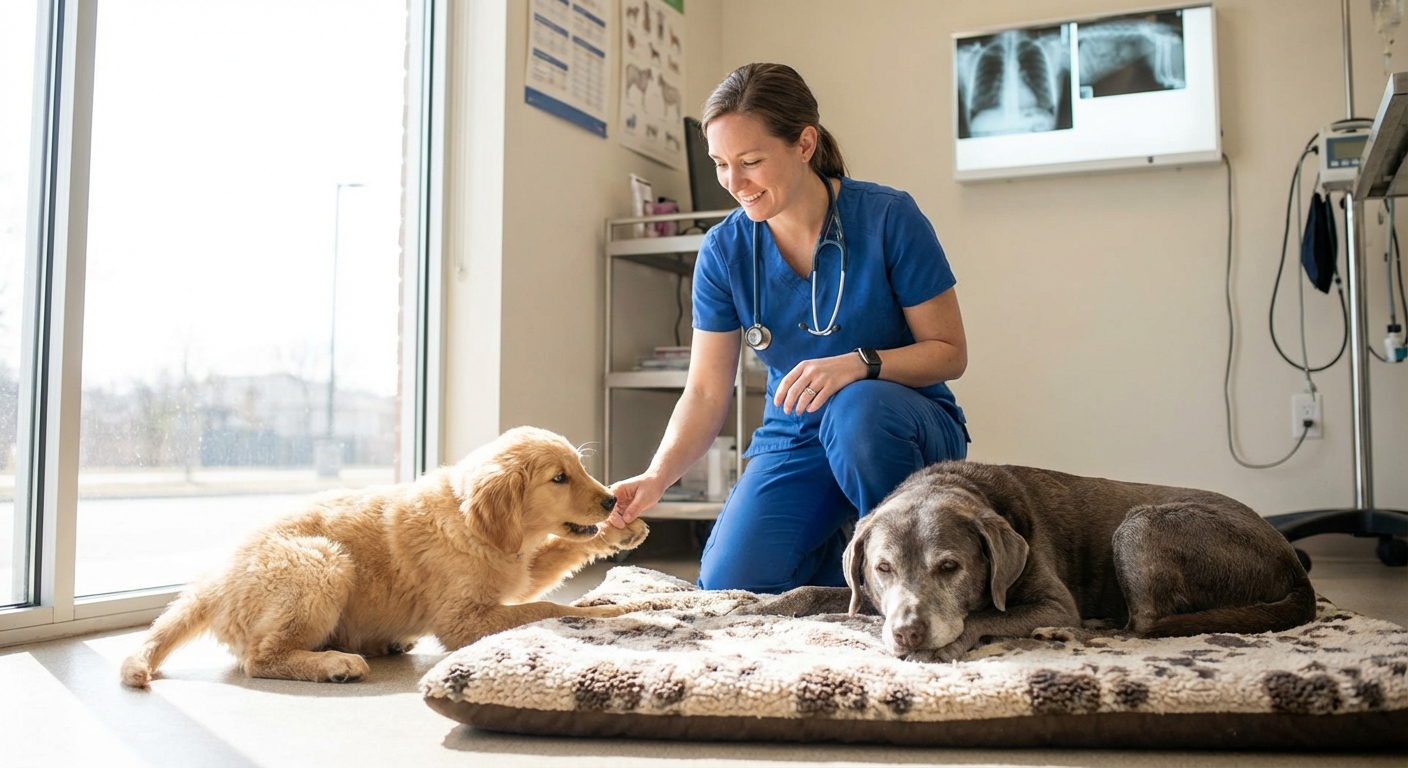
Dogs don’t have one health plan for life—they have several. What your puppy needs from the vet looks completely different from what your grey-muzzled senior needs. Yet many owners don’t change their routine as their dog ages.
Introduction
This guide walks through vet-backed priorities at every life stage, with practical, breed-aware advice you can follow year after year.
1. The Puppy Stage (0–12 Months): Building a Strong Foundation
Puppyhood is where we prevent many future problems.
Key vet visits and tests
- Initial exam (8–10 weeks): full physical, parasite check, and baseline health record.
- Vaccine series: usually every 3–4 weeks until 16 weeks:
- Distemper, parvo, adenovirus, +/- parainfluenza
- Bordetella for social or boarding puppies
- Rabies at the age required by your local laws
- Fecal exams: looking for intestinal parasites.
- Discussion topics: nutrition, behavior, house training, spay/neuter timing.
Breed-specific puppy priorities
- Large/giant breeds (Danes, Mastiffs, Rottweilers):
- Use large-breed puppy food to slow growth and support joints.
- Avoid intense jumping, Frisbee, and long runs until growth plates close (often 12–18 months).
- Toy breeds (Yorkies, Chi mixes):
- Watch for hypoglycemia (low blood sugar)—tiny, shaky, or listless puppies need urgent vet care.
- Brachycephalics (Frenchies, Pugs):
- Discuss snoring, noisy breathing, and heat risks early; some may later benefit from airway surgery.
Socialization and training: a vet’s behavioral prescription
- Positive exposure to new people, kids, dogs, car rides, grooming, and vet visits.
- Reward-based puppy classes after the first vaccine or two (ask your vet what’s safe in your area).
2. The Young Adult Stage (1–3 Years): Turning Chaos Into Routine
Young adults still feel like puppies but are physically mature. This is where health habits become lifestyle.
Vet check focus
- Annual exam: weight, body condition, joints, skin, heart, teeth.
- Vaccines: boosters based on lifestyle and regional risk (e.g., leptospirosis, Lyme, influenza).
- Parasite control: year-round heartworm, flea, and tick prevention.
Spay/neuter timing: breed and size matter
- Small and medium breeds: often spayed/neutered around 6–9 months.
- Large/giant breeds: many vets now recommend waiting until 12–18 months to reduce some joint and cancer risks; discuss pros/cons with your vet.
Exercise by personality and breed
- High-drive breeds (Border Collies, Belgian Malinois):
- Daily mental work (tricks, scent games, agility foundations) plus physical exercise.
- Bulldogs & Pugs:
- Several short walks; watch for over-heating and labored breathing. Avoid high heat and humidity.
3. The Prime Adult Stage (3–7 Years): Preventing Silent Problems
Your dog looks healthy and energetic—which is when hidden problems quietly begin.
Vet exam priorities
- Annual physical: many vets recommend every 6–12 months, especially for breeds with known issues.
- Baseline lab work: blood and urine tests can detect early kidney, liver, hormonal, or metabolic problems.
- Dental checks: this is often when periodontal disease starts.
Breed-focused screening
Ask your vet about:
- Labradors & Goldens: joint checks; consider hip/elbow x-rays if planning active sports.
- Cavaliers: early heart scans or chest auscultation for murmurs.
- Boxers & Dobermans: heart rhythm and cardiomyopathy screening.
- Dachshunds & Corgis: back health, weight control, and jump-limiting strategies.
Lifestyle tweaks vets love to see
- Weight control: prevent creeping weight gain by measuring food and reviewing diet yearly.
- Joint protection: omega-3 supplements, ramps instead of jumping, non-slip floors where possible.
- Mental enrichment: puzzle feeders, new walking routes, training refreshers.
4. The Senior Stage (7+ Years): Catching Issues Early
Small breeds may not feel truly senior until 9–10, but vet care shifts around 7 for most dogs.
How often should seniors see the vet?
- Every 6 months is ideal for senior dogs.
These visits typically include:
- Thorough physical exam (eyes, heart, joints, abdomen, lymph nodes).
- Weight and muscle condition score.
- Bloodwork (checking kidneys, liver, thyroid, blood sugar).
- Urinalysis.
Common senior issues and what to watch for
- Arthritis: slowing down, stiffness, hesitation on stairs.
- Dental disease: bad breath, dropping food, pawing at mouth.
- Cognitive decline: pacing, night-time restlessness, accidents indoors.
- Organ disease: increased drinking/peeing, weight loss, vomiting.
Breed angles:
- Large breeds (Shepherds, Retrievers, Rottweilers): arthritis and cancer are big concerns.
- Schnauzers & some small breeds: higher risk of diabetes and pancreatitis.
- Spayed females: may leak urine; there are safe treatments your vet can offer.
Vet-approved comfort and mobility support
- Prescription pain control and joint supplements.
- Ramps, supportive harnesses, orthopedic beds.
- Low-impact exercise: short, frequent walks or swimming.
5. End-of-Life Care: Compassionate Decisions With Vet Support
This is the stage no one wants to think about—but planning ahead helps your dog and your family.
Quality-of-life conversations
Vets often use scales that look at:
- Pain levels
- Appetite and hydration
- Ability to move and toilet comfortably
- Enjoyment of daily activities
If you’re wondering, “Is my dog still comfortable?” that’s a signal to talk openly with your vet.
Hospice and palliative care options
- Pain management and comfort medications.
- Home modifications to prevent slips and falls.
- Scheduled euthanasia when suffering outweighs good days.
Product Choices Vets Commonly Recommend at Each Stage
Puppies
- Food: complete and balanced puppy diet, size-appropriate.
- Supplements: usually not needed if on a quality food—check with your vet before adding.
- Gear: harnesses (especially for brachycephalics) to reduce neck strain.
Adults
- Food: adult diet tailored to activity and body condition.
- Dental products: VOHC-approved chews, toothbrush + dog toothpaste.
- Prevention: year-round heartworm, flea, and tick control.
Seniors
- Food: senior or joint-support diets where appropriate.
- Supplements: joint supplements (glucosamine/chondroitin, omega-3), with vet guidance.
- Comfort gear: orthopedic beds, ramps, raised bowls for arthritic dogs.
Always discuss new products with your vet, especially if your dog has a chronic condition.
Building a Lifelong Health Timeline
Here’s a simple vet-style timeline you can adapt:
- 0–6 months: monthly vet visits, vaccines, parasite checks, foundation training.
- 6–12 months: spay/neuter discussion, transition to adult diet at vet-recommended age.
- 1–7 years: yearly exams (or more), vaccine boosters, parasite prevention, dental care.
- 7+ years: exams every 6 months, annual labs, arthritis and senior screenings.
Print or save this, customize for your dog’s breed and lifestyle, and review at each visit.
Final Thoughts
Your dog’s needs change with every life stage—and so should your vet plan. By adjusting nutrition, exercise, screening tests, and home care as your dog grows, you’ll catch problems earlier and keep them comfortable longer. Work with your veterinarian as a teammate, and you’ll navigate every chapter—from wild puppy zoomies to peaceful senior naps—with confidence.