
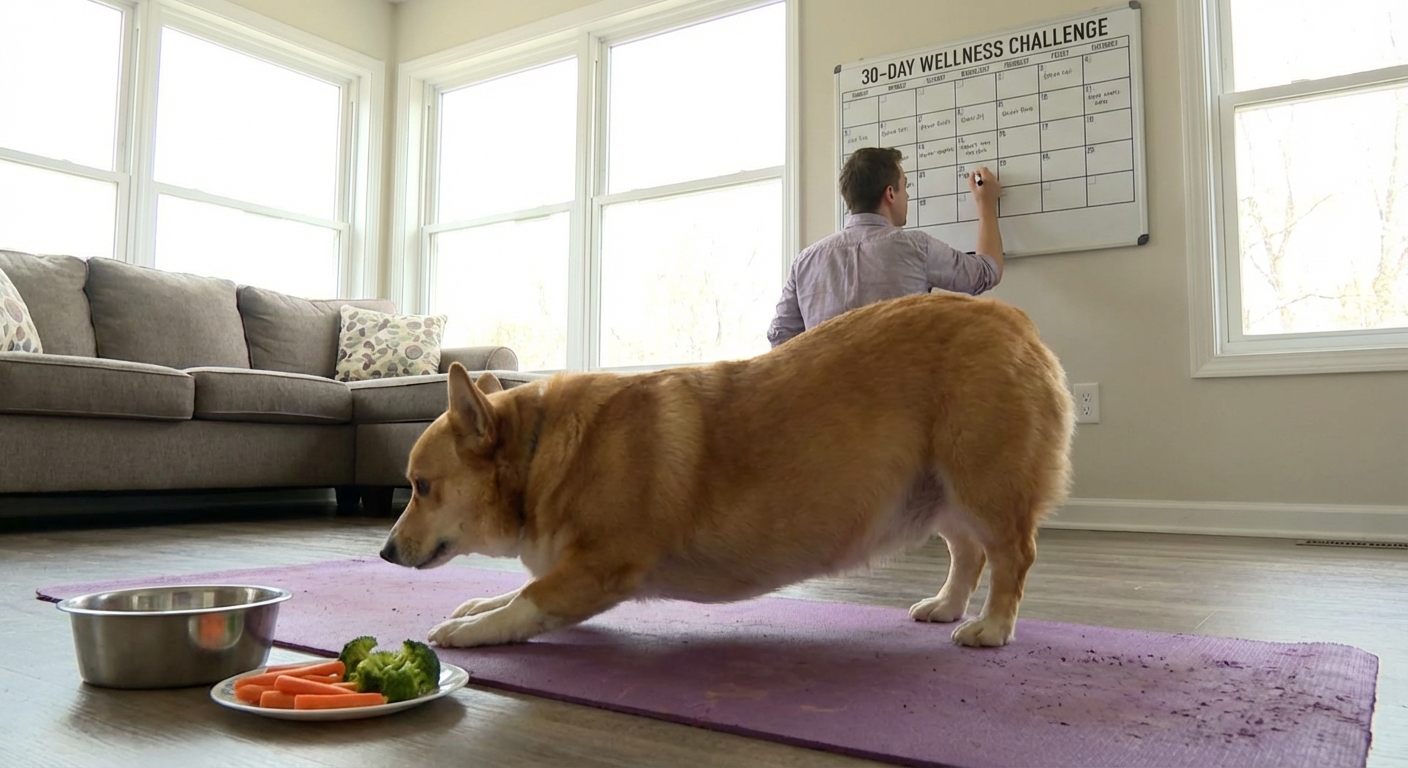
Maybe your dog’s gained a little weight. Maybe walks have gotten shorter, vet visits less frequent, or training has slipped. You’re not alone—and you’re not a bad dog parent.
A 30-Day Reset for Real-Life Dog Owners
This 30-day wellness reset is designed to be realistic and flexible, not a boot camp. You’ll focus on one manageable goal at a time, building better habits for both you and your dog.
Week 1: Foundations – Food, Routine, and Observation
Day 1: Baseline Check-In
Write down:
- Your dog’s current weight (or estimate; confirm at next vet visit)
- Age, breed, and any known health conditions
- Current food brand, amount, and number of treats per day
Take front, side, and top-view photos of your dog for comparison later.
Day 2: Body Condition Score (BCS) Test
Use a 1–9 scale chart from your vet or a reputable source.
Goals:
- Feel ribs easily but not see them clearly in most breeds (exceptions: very lean sighthounds)
- Visible waist from above
If your dog’s BCS is 6 or higher, note that gradual weight loss will be part of your wellness plan.
Day 3: Measure Meals
Switch from guessing to measured portions:
- Use a measuring cup or kitchen scale.
- Find the feeding guide on your dog’s food.
Large-breed puppies should be on large-breed puppy food; toy breeds often need more calories per pound than large adults.
Day 4: Treat Tally and Swap
Track every treat your dog gets in one day.
Then:
- Cut treat calories by about 25–30% if your dog is overweight.
- Swap some high-cal treats (cheese, big biscuits) for:
- Carrot coins
- Green beans
- Freeze-dried single-ingredient meats in small pieces
Day 5: Fresh Water and Bowl Audit
- Wash all food and water bowls.
- Switch to stainless steel or ceramic if you use plastic.
- For flat-faced breeds, consider a shallow, wide bowl.
Day 6: 10-Minute Walk + 5-Minute Training
Start your movement baseline:
- Do at least 10 minutes of walking at your dog’s comfortable pace.
- Add 5 minutes of simple training (sit, down, touch).
High-energy breeds may need more; senior or brachycephalic dogs may start with less, and that’s okay.
Day 7: Schedule or Confirm a Vet Wellness Visit
If your dog hasn’t had a checkup in 12 months (or 6 months for seniors), schedule one now.
Bring:
- Food info and treat list
- Questions about breed-specific screening or supplements
Week 2: Movement, Mind, and Mouth
Day 8: Walk Upgrade – Sniffari Style
Instead of just distance, focus on sniff time:
- Let your dog choose the route for part of the walk.
- Allow frequent sniff breaks.
Sniffing is mental exercise—great for all dogs, especially high-anxiety breeds like some Shepherds and herding dogs.
Day 9: Dental Health Start
Choose one:
- Buy a dog-safe toothbrush and toothpaste, or
- Get a VOHC-approved dental chew for your dog’s size.
Start with just touching lips and teeth and rewarding, no brushing yet.
Day 10: Handling Practice
Spend 5–10 minutes gently:
- Touching paws
- Looking inside ears
- Lifting lips
Reward constantly. This matters especially for sensitive breeds like Shibas, Chihuahuas, and many rescues.
Day 11: Brain Games Intro
Try one new enrichment activity:
- Scatter part of a meal in the yard for a sniff search
- Use a snuffle mat
- Hide 3–5 treats in easy places and cue “find it!”
Working breeds (Border Collies, Malinois) and terriers love these jobs.
Day 12: Indoor Play Plan
For bad-weather days, prepare 2–3 options:
- Tug with rules (release on cue)
- Short hallway fetch
- Training tricks (spin, shake, roll over)
Flat-faced breeds and seniors especially benefit from low-impact indoor games.
Day 13: Dental Step Two
If using a brush:
- Introduce toothpaste flavor on your finger first.
- Then brush just a few teeth and reward.
- Offer 1 appropriate chew and supervise.
If using chews:
Day 14: Rest and Reflect
Short, easy walk. Review:
- Is your dog more willing to move?
- Any changes in stool with diet tweaks?
Write down anything to discuss with your vet.
Week 3: Environment and Breed-Specific Tweaks
Day 15: Home Safety Scan
Look for hazards:
- Slippery floors (add rugs, especially for seniors and long-backed breeds like Dachshunds and Corgis)
- Unblocked stairs for dogs with mobility issues
- Access to toxic foods (xylitol, chocolate, grapes)
Day 16: Jump and Impact Audit
Especially important for:
- Long-backed dogs
- Large-breed puppies
- Senior or arthritic dogs
- Do they jump on/off high beds or couches?
- Can you add ramps or stairs?
Ask:
Day 17: Harness and Collar Check
- Ensure collar/harness fit: you should fit two fingers under straps comfortably.
- For toy breeds and brachycephalics, use a harness instead of neck collar for walks.
Day 18: Breed Research Day
Spend 20 minutes on your dog’s breed or mix:
- Common health issues
- Recommended screening tests
- Labs/Goldens: joints, obesity, cancer
- Frenchies/Bulldogs: airway, spine, skin folds
- Huskies: escape artists; need serious exercise and mental work
Examples:
List 2 health priorities to discuss with your vet.
Day 19: Parasite Prevention Check
Confirm your plan:
- Heartworm prevention
- Flea/tick control, tailored to your region and activities
Set or adjust calendar reminders.
Day 20: Grooming Session
Do what suits your dog’s coat:
- Short coat (Pit Bulls, Boxers): rubber brush and skin check
- Double coat (Shepherds, Huskies): de-shedding tool
- Doodles and curlies: detangling brush session
Check for lumps, bumps, and sore spots while grooming.
Day 21: Movement Milestone
Increase walk or play time by a comfortable 5–10 minutes if your dog tolerates it.
Senior or arthritic dogs may do better with two shorter sessions instead of one long one.
Week 4: Vet Partnership, Consistency, and Long-Term Plan
Day 22: Vet Visit and Wellness Conversation
At the appointment, ask:
- Is my dog’s weight healthy for their breed and build?
- Do you recommend any screening tests for their age and breed?
- Are joint supplements or omega-3s appropriate?
Take notes and set follow-up reminders.
Day 23: Update Your Wellness Plan
Based on the vet’s input, decide:
- Daily movement goal
- Dental care frequency
- Any supplements or diet changes
Write it down and post it where you’ll see it.
Day 24: Training Tune-Up
Focus on one safety behavior:
- Reliable recall
- “Leave it”
- Loose-leash walking
Practice for 10 minutes with high-value rewards.
Day 25: Social and Emotional Check
Ask:
- Does my dog seem anxious, clingy, or withdrawn?
- Are they reactive on walks?
- A trainer or behaviorist referral from your vet
- More structured enrichment instead of chaotic dog park trips
If yes, consider:
Day 26: Revisit Enrichment Tools
Choose 1–2 items to keep in rotation:
- Puzzle feeder
- Snuffle mat
- DIY cardboard box shredding with hidden treats (for supervised terriers and scent hounds)
Day 27: Photo and Weight Check
Take new front, side, and top-view photos.
If you can, weigh your dog at home or on a vet/clinic scale.
Compare to Day 1:
- Any visible waist improvement?
- More energy on walks?
Day 28: Joint and Mobility Observation
Watch your dog:
- Getting up from rest
- Climbing stairs (if allowed)
- Jumping into the car (if safe and approved)
Note stiffness, limping, or reluctance and report it to your vet if it persists.
Day 29: Celebrate Wins
List three positive changes, such as:
- More energy
- Better leash manners
- Less begging
Treat your dog to extra play or a new toy.
Day 30: Lock in Your Ongoing Routine
Decide what sticks:
- Daily: Measured meals, walks, quick body check, a few minutes of training
- Weekly: Grooming, ear/paw check, dental care
- Monthly: Weight and photo record, parasite prevention
- Annually/Semi-annually: Vet wellness exams and bloodwork
The 30-day reset isn’t about perfection. It’s about re-aligning daily life with what helps your dog feel better, move easier, and enjoy more years by your side.
Start where you are, keep it doable, and adjust as you go—your dog will feel the difference.